

Dry Cooler Maintenance Guide: Extending Equipment Life Beyond 50,000 Hours
A well-maintained industrial dry cooler should outlive the equipment it serves. Yet in our 20+ years of thermal engineering at Boyi Cooling, we routinely see units retired at 8-10 years not because they failed, but because preventable issues—clogged fins, loose terminals, degraded coatings—were allowed to compound. With a disciplined maintenance program, 50,000+ operating hours (roughly 12-15 years of continuous duty) with a 99%+ reliability rate is a realistic target, not marketing talk. This guide lays out exactly what to do daily, weekly, monthly, quarterly, and annually, plus the fin care, coating, winterization, and predictive practices that separate the best-performing installations from the rest.
Why Maintenance Economics Matter
For most operators, the dry cooler is a low-attention asset—which is precisely why small defects escalate. A fouled coil can raise condensing temperature by 5-8°C, forcing compressors or pumps to work harder and adding measurable energy cost every month. Bent fins restrict airflow; a single square meter of blocked fin face can cut effective capacity noticeably in high-ambient sites. Loose electrical terminals create hot spots that eventually fail a fan circuit. The economics are simple: scheduled preventive maintenance costs a fraction of one emergency replacement, and the efficiency recovered from clean coils alone typically pays for the program.
Daily and Weekly Checks: The Five-Minute Habit
The highest-value maintenance costs almost nothing: observation. Assign operators a short walk-around log, executed daily or at least weekly depending on site criticality.
- Visual inspection: Look for debris accumulation (leaves, plastic film, dust blankets), physical damage, corrosion spots, and anything nesting in or around the coil face.
- Noise and vibration: A new grinding, clicking, or imbalance hum is the earliest warning of bearing wear, blade fouling, or a loosening motor mount. Log what you hear—trends matter more than single readings.
- Ambient conditions: Note inlet air temperature and unusual recirculation. Hot air short-circuiting back into the coil face degrades capacity and stresses fans.
- Visible leaks or drips: Any fluid trace near headers, valves, or piping gets photographed and reported the same day.
Ten minutes of observation per week consistently prevents the majority of emergency call-outs we see across customer sites in over 30 export countries.
Monthly Tasks: Coils, Filters, and Fan Blades
Monthly work targets the three surfaces that degrade fastest in dusty or industrial environments.
1. Coil Cleaning
Clean the fin pack with compressed air blown counter to the normal airflow direction, or with low-pressure water (below 5 bar, always against the airflow) for heavier fouling. Never use a high-pressure washer at close range—it bends fins and drives water into the motor compartment. On sites with oily air (kitchens, manufacturing), add a mild alkaline coil cleaner and rinse thoroughly.
2. Filter Inspection
If your unit or the adjacent air-handling equipment carries intake filters or insect screens, inspect and clean them monthly. A saturated screen mimics a fouled coil and masks the real airflow problem.
3. Fan Blade Inspection
Check each blade for chipped edges, caked-on dust (a common source of imbalance), and free rotation. Dust that is heavy on one blade only will produce vibration within weeks—clean all blades uniformly.
Quarterly Maintenance: Mechanics and Electrics
Every three months, move from cleaning to mechanical and electrical service:
Fan Motor Lubrication
Grease motor bearings per the motor manufacturer's interval and quantity. Over-greasing is as harmful as under-greasing—follow the specified shot count and wipe excess from the relief port.
Belt Tension & Condition
On belt-driven units, check deflection against specification, inspect for glazing, cracking, or fraying, and verify pulley alignment. Replace belt sets as matched pairs.
Electrical Tightening
Re-torque terminal connections in the control panel and motor junction boxes, inspect contactor tips, and verify overloads match the motor nameplate. Thermal events usually start at loose lugs.
The Annual Overhaul: Resetting the Clock
Once a year—ideally before your hottest season—perform a full-day overhaul:
- Full coil deep clean: Chemical wash of both coil faces, flushing years of embedded fouling that monthly air blowing cannot reach.
- Fin straightening: Comb and realign every bent fin band; even minor damage compounds into airflow loss.
- Coating inspection: Examine the full coil surface and casing for coating wear, scratches, and corrosion onset (detailed below).
- Control system calibration: Verify temperature sensors, fan speed signals, and staging setpoints against reference instruments. Recalibrate anything drifting more than 1-2°C.
- Structural checks: Frame bolts, vibration isolators, ladder access, and guarding.
Document everything in the unit's service record. A complete annual log is also your strongest asset in warranty discussions—and one of the first things buyers' engineers check during factory audits. Learn what else they verify in our guide to dry cooler performance testing and quality assurance.
Fin Care: Protecting the Heart of Heat Transfer
Fins multiply the heat transfer surface, and they are also the most fragile part of any coil. Three habits keep them effective:
- Use a fin comb, never a screwdriver: A matching-pitch fin comb straightens bent fins cleanly. Improvised tools crush fin collars and loosen tube contact, permanently reducing heat transfer.
- Prevent the damage: Fit coil guards where forklifts or foot traffic pass nearby, keep vegetation trimmed back at least one meter, and install insect screens in dusty or agricultural locations.
- Maintain airflow efficiency: Straightened, clean fins restore up to 90% of lost airflow performance. If your log shows capacity creeping downward, fouled or deformed fins are the first suspect.
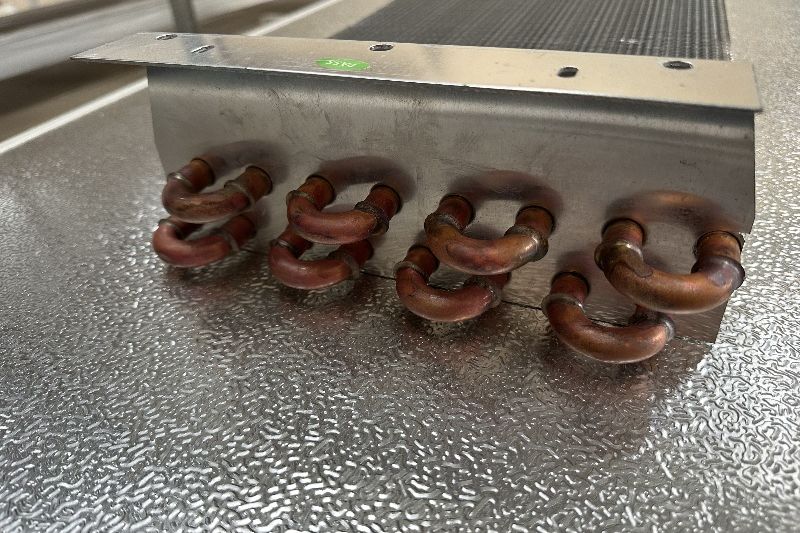
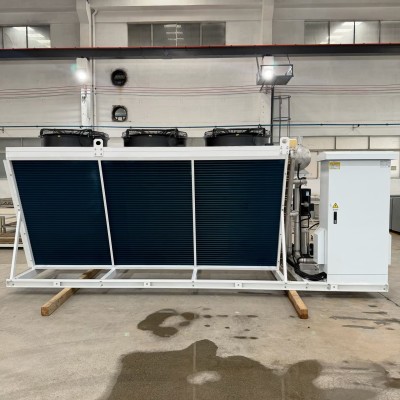
350KW Copper Tube V-type Dry Cooler for Food & Beverage Processing
Designed for hygienic, washdown-friendly operation in food and beverage plants, this V-type unit combines copper tube and aluminum fin construction with service-friendly access—easy coil cleaning, straightforward fan maintenance, and long service life in demanding ambient conditions. Boyi Cooling builds each unit to your site's airflow, footprint, and climate requirements.
View Product DetailsCoating Maintenance: Preserving the Corrosion Barrier
Anti-corrosion coatings—from standard epoxy to full electrophoretic (e-coat) treatment—are the difference between a coil that survives coastal or industrial atmospheres and one that does not. We explain the treatment itself in our article on electrophoretic anti-corrosion treatment; maintenance is the second half of that story.
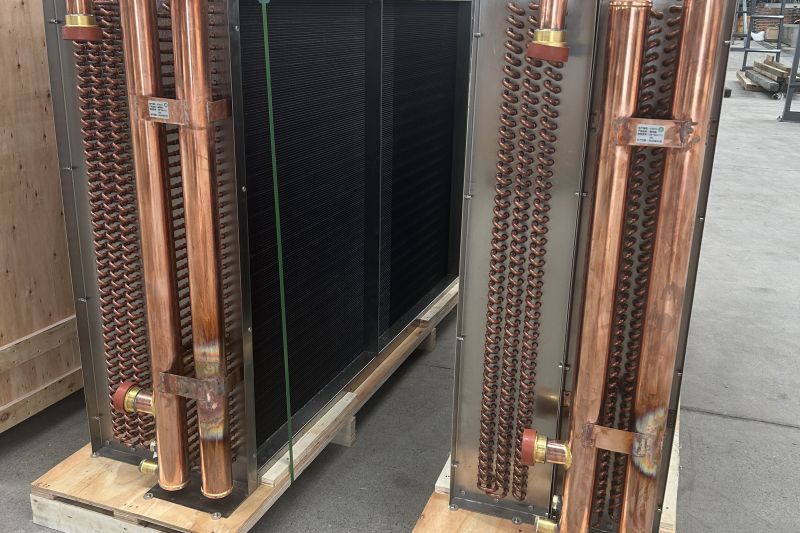
- Inspect annually: Photograph the coil face and casing each overhaul. Track coating condition year over year—chalking, discoloration, and scratch clusters are early indicators.
- Touch up promptly: Clean the affected area, apply the manufacturer-approved touch-up compound, and feather the edges. Small repairs stop corrosion from undercutting adjacent coating.
- Re-coating intervals: In benign indoor air, coatings routinely last the unit's life. In coastal salt fog, chemical plants, or heavy industrial air, plan for professional re-coating evaluation every 5-8 years based on your inspection photos.
Winterization: Surviving the Freeze
Frozen coils split tubes. Before the first freeze, every cold-climate operator should complete a winterization pass:
Glycol Concentration
Verify the inhibited glycol percentage matches your site's design freeze point with margin—typically 25-30% for most temperate zones, more for extreme climates. Test a sample, not just the fill record.
Drain-Back Design
Confirm drain-back loops and valves actually drain: trapped low points hold water that freezes first. Exercise isolation and drain valves during the check.
Heater Tape & Tracing
Inspect heat tracing on exposed piping, gauges, and instrumentation. Test the thermostat or controller, and replace degraded tape before winter—not after a burst pipe.
Also verify your control logic keeps minimum flow (or fan staging limits) active at low ambient, preventing stagnant water from sitting in an exposed coil during wind chill events.
Predictive Maintenance: From Fixing to Forecasting
The most significant shift in dry cooler upkeep is moving from scheduled guesses to data-driven action. Three tools lead this change:
- IoT sensor trends: Continuous logging of inlet/outlet temperatures, fan current, and pressure lets you spot efficiency drift weeks before an operator would notice. Our BMS integration guide covers the data points worth connecting.
- Vibration analysis: Baseline each fan after commissioning, then trend readings quarterly. Rising amplitude predicts bearing or imbalance failures with enough lead time to schedule a repair instead of an emergency.
- Thermal imaging: An annual IR survey of electrical panels, motors, and even coil faces (for flow maldistribution) catches hot spots during a 30-minute scan.
Operators who adopt predictive practices typically convert unplanned downtime into planned, low-cost interventions—the single biggest factor in reaching that 50,000-hour milestone.
A Practical Maintenance Schedule Summary
| Frequency | Core Tasks | Key Benefit |
|---|---|---|
| Daily / Weekly | Visual inspection, noise/vibration listening, ambient monitoring, leak checks | Catches 80% of emerging faults early |
| Monthly | Coil cleaning (air/low-pressure water), filter and screen service, fan blade check | Preserves airflow and capacity |
| Quarterly | Motor lubrication, belt tension/alignment, electrical tightening | Prevents mechanical and electrical failures |
| Annually | Deep coil clean, fin straightening, coating inspection, control calibration | Resets efficiency to near-commissioning levels |
| Seasonal | Winterization: glycol test, drain-back check, heater tape inspection | Eliminates freeze damage |
| Continuous | IoT trends, vibration analysis, annual thermal imaging | Converts failures into planned repairs |
Boyi Cooling's Reliability Record
These schedules are not theoretical. Boyi Cooling has manufactured custom dry coolers and heat exchangers for more than 20 years, exporting to 30+ countries across data center, mining, chemical, food processing, and HVAC applications. Across our installed base, customers who follow the maintenance program above consistently report 50,000+ hours of operation at a 99%+ reliability rate in their testimonials. Our engineering team designs every unit for maintainability from day one: accessible coil faces, serviceable fan compartments, coating options matched to the site atmosphere, and optional sensor packages that feed your BMS from the start.
Whether you are specifying a new system or inheriting an aging one, our team can review your duty conditions and recommend a maintenance plan that fits your climate, air quality, and staffing reality—contact our engineering team for a no-obligation review, or explore our full range of industrial dry coolers and heat exchangers. For a tailored configuration, request a customized quote and our engineers will respond with sizing recommendations based on 20+ years of thermal design experience.
Frequently Asked Questions
How often should a dry cooler be cleaned?
Clean coils monthly with compressed air or low-pressure water in dusty environments, and perform a full chemical deep clean annually. Sites with oily or heavily particulate-laden air may need bi-weekly air blowing during peak seasons.
What shortens a dry cooler's lifespan the most?
The top three are fin fouling (chronically reduced airflow), neglected electrical connections (thermal failures), and unaddressed coating damage in corrosive atmospheres. All three are fully preventable with the schedule in this guide.
Can an older dry cooler be restored instead of replaced?
Often, yes. A deep coil clean, fin combing, coating touch-up, and control recalibration frequently recover most of the lost capacity at a small fraction of replacement cost. Have the unit assessed before budgeting a new purchase.
Key Takeaways
- 50,000+ hours is achievable: weekly observation, monthly cleaning, quarterly servicing, and an annual overhaul form the complete framework.
- Fin care with proper combs recovers up to 90% of airflow efficiency—never improvise with metal tools.
- Coating inspection and prompt touch-up protect coils in corrosive atmospheres; re-coating evaluation every 5-8 years in harsh sites.
- Winterization (glycol, drain-back, heater tape) prevents the most expensive failure mode: frozen, split coils.
- Predictive tools—IoT trends, vibration analysis, thermal imaging—turn unplanned downtime into scheduled maintenance.
Ready to build reliability into your next cooling system? Learn about Boyi Cooling's 20+ years of thermal engineering or browse our dry cooler product range to find a maintainable solution engineered for your site.