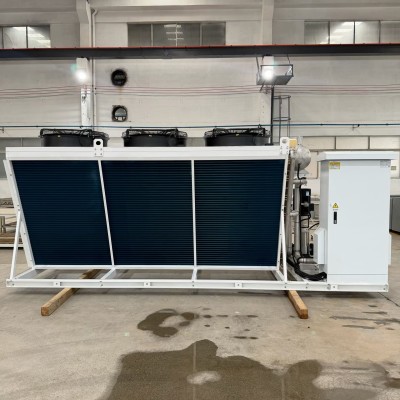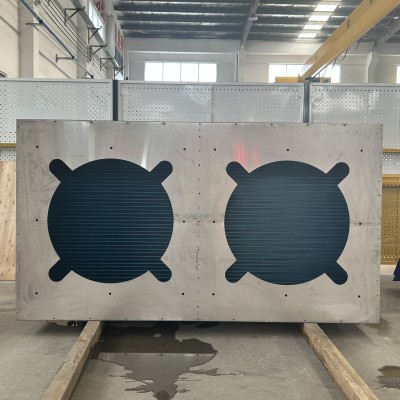
Understanding Dry Cooler Technology: Innovative Heat Transfer Solutions
As experts in thermal management, we're here to shed light on a crucial component in maintaining optimal operating temperatures for various systems: the dry cooler. In this blog post, we'll dive deep into understanding dry cooler technology and its significant role. These systems represent a pivotal shift towards more sustainable and efficient industrial cooling, diverging from traditional methods by eliminating water loss.
Join us as we explore how these innovative solutions transfer heat without water consumption, ensuring efficiency and longevity for critical equipment. We will examine the core principles, the diverse applications, and the economic and environmental benefits they bring. Understanding this technology is the first step, but choosing the right partner is equally vital. We'll also guide you on why selecting a premier dry cooler manufacturer is paramount for achieving tailored, reliable thermal management.
Key Takeaways
Fundamental Principle: Dry coolers operate on the principle of sensible heat rejection, using ambient air to cool a process fluid (like water or a water-glycol mix) within a closed-loop system. Fans force air across a finned-tube heat exchanger, transferring heat from the fluid to the air without any evaporation, distinguishing them from cooling towers.
Core Components and Function: The primary components of a dry cooler are the finned-tube heat exchanger (the coil), powerful fans (often energy-efficient EC models), and a structural frame. The hot process fluid circulates through the coil's tubes. The fins attached to these tubes dramatically increase the surface area for heat transfer. Fans then blow ambient air over these fins, absorbing the heat and cooling the fluid before it is recirculated back to the process.
Key Advantages: The most significant benefits of dry cooling technology are water conservation and reduced operational costs. Because they are closed-loop systems that do not rely on evaporation, they eliminate the need for makeup water, sewer costs, and expensive water treatment chemicals. This also prevents issues like scaling and biological growth, leading to lower maintenance requirements and a longer system lifespan.
Critical Applications: Dry coolers are indispensable in a wide array of applications where reliable temperature control is essential. This includes data centers, power generation plants, manufacturing processes (like plastic injection molding), HVAC systems, and the food and beverage industry. They are particularly crucial for cooling generator sets, preventing them from overheating, which ensures stable operation and protects the investment.
Customization is Key: Standard, off-the-shelf solutions rarely provide optimal performance. A custom dry cooler allows for tailoring every aspect to the specific need, including materials (copper, stainless steel, or carbon steel tubes with aluminum fins), physical configuration (V-shape or Horizontal), and advanced controls. This ensures maximum efficiency, longevity, and a perfect fit for the application's unique thermal Gload and environmental conditions.
Choosing the Right Manufacturer: The success of a dry cooling solution heavily depends on the expertise of the manufacturer. A top-tier dry cooler manufacturer offers not just a product, but a partnership. Look for companies with proven engineering expertise, comprehensive quality certifications (like ISO), robust R&D capabilities, and responsive after-sales support. Their ability to provide customized solutions and expert guidance is invaluable.
The Fundamentals of Dry Cooler Technology: How a Dry Cooler Works
The urgent, global push for more sustainable and efficient industrial processes has cast a spotlight on thermal management. Among the most impactful innovations in this field is the dry cooler. Often referred to as an air cooler, this technology offers a robust alternative to traditional cooling methods by leveraging the power of ambient air. Understanding its fundamental principles is the first step to appreciating its vast potential across numerous sectors.
Defining the Dry Cooler: Beyond Evaporation
At its core, a dry cooler is a heat exchange device that uses air to cool a process fluid, typically water or a water-glycol mixture, circulating within a closed loop. The defining characteristic is that it achieves this cooling without evaporation. This process is based on the principle of "sensible heat rejection," where heat is transferred from the hotter fluid to the cooler ambient air simply because of the temperature difference.
This stands in stark contrast to evaporative systems like cooling towers, which rely on the evaporation of water to dissipate heat. While effective, evaporative cooling consumes large quantities of water and requires extensive chemical treatment to prevent scale, corrosion, and biological growth. A dry cooler completely bypasses these issues by operating as a sealed, closed-circuit system, eliminating water consumption, water treatment costs, and the risks associated with waterborne bacteria. This makes it an inherently more sustainable and low-maintenance solution, especially in water-scarce regions or for applications where water contamination is a critical concern.
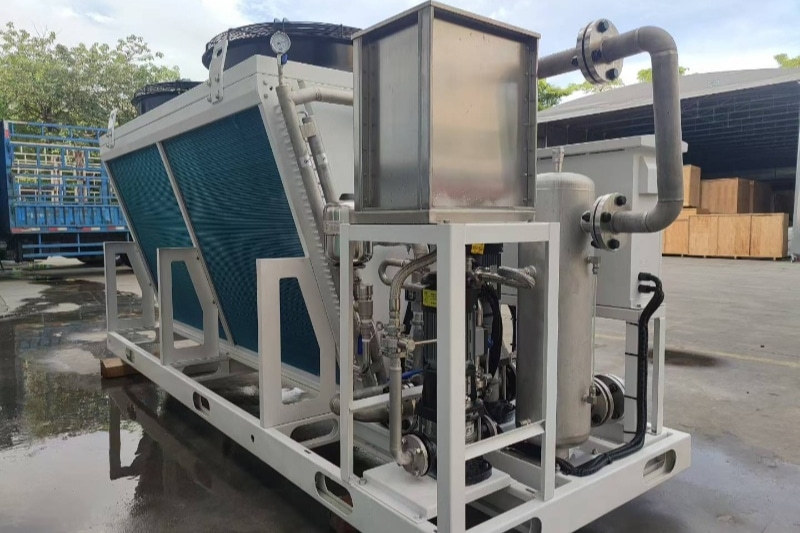
The Role of Heat Exchangers in a Dry Cooler System
The heart of every dry cooler is its heat exchanger, also known as the finned coil. This component is meticulously engineered to maximize the transfer of thermal energy from the process fluid to the surrounding air. It consists of two main parts: a network of tubes through which the hot fluid flows, and a series of thin metal plates, or "fins," attached to the exterior of these tubes.
The function of the fins is to dramatically increase the surface area available for heat transfer. Without them, the amount of heat that could be dissipated would be limited to the surface area of the tubes alone. By adding hundreds of fins, the total area exposed to the airflow is multiplied many times over, allowing for a much faster and more efficient cooling process. As powerful fans draw or force ambient air across this finned coil, the heat moves from the fluid, through the tube walls, into the fins, and is then carried away by the airstream. The choice of materials for the tubes (such as copper, stainless steel, or carbon steel) and fins (typically aluminum) is a critical design consideration, determined by the type of process fluid, potential for corrosion, and desired thermal conductivity.
Advantages of Dry Cooling: Water Conservation and Reduced Maintenance
The benefits of implementing dry cooler technology are substantial and touch upon economic, environmental, and operational aspects.
Key Advantages of Dry Cooling Systems:
| Advantage | Description |
|---|---|
| Water Conservation | As closed-loop systems, dry coolers use no water for the cooling process itself, eliminating consumption and associated costs. This is a critical advantage in areas with water scarcity or strict environmental regulations. |
| Lower Operating Costs | By eliminating the need for water, businesses save on water bills, sewer fees, and expensive chemical treatments required for evaporative systems. While they may have a higher initial fan power requirement in some climates, the total cost of ownership is often significantly lower. |
| Reduced Maintenance | With no water basin, there are no concerns about scaling, fouling, or biological growth like Legionella. Maintenance is simplified, primarily involving periodic inspection and cleaning of the finned coils and fans. |
| System Cleanliness | Because the process fluid remains in a sealed circuit, it is not exposed to atmospheric contaminants. This keeps the fluid clean, protecting the primary equipment (like generator engines or data center servers) from corrosion and blockages. |
| Environmental Sustainability | The move away from water consumption and chemical usage makes dry cooling an eco-friendly choice. Many systems also utilize high-efficiency motors, further reducing the carbon footprint. |
| Operational Reliability | The simple, robust design with fewer moving parts than a chiller system leads to greater reliability and a longer service life. Performance is consistent and predictable based on ambient air temperature. |
These advantages collectively make dry cooling a compelling solution for any organization looking to improve efficiency, reduce operational expenditures, and enhance its environmental stewardship.
Why a Dry Cooler is Critical for Generator Sets and Other Applications
In the world of industrial equipment, from mission-critical data centers to powerhouse generator sets, heat is the unavoidable byproduct of work. If left unmanaged, this heat becomes a primary threat to operational stability, efficiency, and equipment lifespan. This is where the role of an effective cooling solution becomes paramount. Dry coolers, in particular, serve as a critical defense, ensuring that high-value assets continue to perform reliably and efficiently across a multitude of demanding applications.
Preventing Overheating: The Silent Protector
Generator sets are a prime example of equipment that produces a significant amount of heat during operation. If this thermal energy is not dissipated effectively, the generator's internal temperature can rise to dangerous levels. Overheating is not a minor issue; it can lead to reduced performance, component degradation, automatic shutdown, and in the worst-case scenario, catastrophic failure. A dry cooler acts as a silent protector against these risks. By continuously circulating a coolant through the generator's engine and then rejecting the captured heat into the ambient air, it ensures the generator operates within its optimal temperature range.
This principle extends to countless other applications. In data centers, for instance, servers generate immense heat that must be removed to prevent performance throttling and hardware failure. Dry coolers provide reliable, water-free cooling that is essential for maintaining the uptime and reliability that modern data centers require. Similarly, in manufacturing processes like plastic injection molding or chemical production, precise temperature control is necessary to ensure product quality and safety. A dry cooler delivers this control, safeguarding both the process and the equipment.
Ensuring Operational Stability and Longevity with a Custom Dry Cooler
Standard, one-size-fits-all cooling solutions often fall short of meeting the specific demands of specialized industrial equipment. This is where a custom dry cooler becomes a strategic asset. Operational stability is directly linked to the consistency of the cooling system. A custom solution is engineered to perfectly match the heat load of the application, the ambient environmental conditions, and any physical space constraints. This tailored approach ensures that equipment is not just cooled, but cooled with maximum efficiency and precision.
By maintaining stable operating temperatures, a custom dry cooler minimizes thermal stress on components. This reduction in thermal cycling—the expansion and contraction of materials due to temperature changes—has a direct and significant impact on equipment longevity. Well-maintained temperatures reduce wear and tear, prevent premature failure of seals, gaskets, and electronic components, and ultimately extend the service life of the entire system. Investing in a custom cooling solution is, therefore, an investment in the long-term reliability and durability of your primary operational assets.
The Economic Impact of Efficient Dry Cooler Systems
The decision to implement an efficient dry cooler system is not just an operational one; it is a sound financial strategy with a clear return on investment (ROI). The economic benefits are multifaceted and substantial.
- Reduced Operational Expenditures (OpEx): The most immediate economic impact comes from the elimination of water-related costs. Unlike cooling towers, dry coolers do not consume water, which means no bills for water purchase, sewer discharge, or the expensive chemicals needed for water treatment.
- Lower Maintenance Costs: The simpler design and absence of water-related issues like scaling, corrosion, and biological growth lead to significantly reduced maintenance requirements and costs. This translates to less downtime and more productive operational hours.
- Energy Savings: Modern dry coolers, especially when customized with variable-speed fans and intelligent controls, optimize energy consumption. They adjust performance based on the real-time thermal load and ambient conditions, ensuring no energy is wasted. This can lead to dramatic reductions in electricity consumption compared to older or improperly sized systems. A study by Eurovent Certification highlighted that a properly sized dry cooler could save a system in Milan approximately 20,000 kWh annually, demonstrating the significant potential for energy cost reduction.
- Enhanced Productivity and Reduced Downtime: By preventing overheating and ensuring equipment reliability, dry coolers safeguard against costly, unscheduled downtime. In a manufacturing or power generation context, every hour of operation is valuable, and the cost of an unexpected shutdown can be enormous. An efficient cooling system is a powerful insurance policy against such losses.
Ultimately, the economic impact of an efficient dry cooler system extends beyond simple cost savings. It contributes to a more resilient, predictable, and profitable operation by enhancing equipment performance and longevity.
Custom Dry Cooler Solutions: Tailoring Technology to Your Needs
The pursuit of optimal thermal management rarely leads to a one-size-fits-all product. The unique demands of different industrial processes, climates, and physical spaces mean that the most effective and efficient cooling solutions are almost always customized. A custom dry cooler is not merely an assembly of parts; it is an engineered system where every component is selected and configured to work in harmony, delivering precisely the performance required. This tailored approach unlocks significant gains in efficiency, reliability, and long-term value.
Materials and Configurations: The Core of a Custom Dry Cooler
The foundation of a high-performance custom dry cooler lies in the careful selection of its materials and physical configuration. These choices directly impact its thermal efficiency, durability, and suitability for the operating environment.
Heat Exchanger Materials: The finned-tube coil is where the critical heat transfer occurs. Customization allows for the selection of the ideal materials based on the process fluid and ambient conditions.
- Tubes: Copper is a common choice due to its excellent thermal conductivity. For applications involving corrosive fluids or requiring greater durability, stainless steel or carbon steel tubes are often specified.
- Fins: Aluminum is the standard for fins because it is lightweight and offers good heat transfer. In corrosive environments, such as coastal areas with salt spray or industrial sites with airborne chemicals, specialized coatings (like epoxy) can be applied to the fins and other components to prevent degradation and extend the cooler's life.
Structural Configurations: Dry coolers are typically available in two primary shapes, each offering distinct advantages depending on the installation site.
- Flatbed (Horizontal) Coolers: These units feature a horizontal coil with fans that push air vertically. Their main advantage is their low profile, but they require a larger footprint.
- V-Shape Coolers: In this design, two coils are mounted at an angle to form a "V," with fans at the top pulling air through the sides. This configuration provides a much larger heat exchange surface area for a given footprint, making it a highly space-efficient option for large-capacity needs.
The ability to choose from a variety of materials and structural designs is the essence of customization, ensuring the final product is a perfect match for the application's demands.
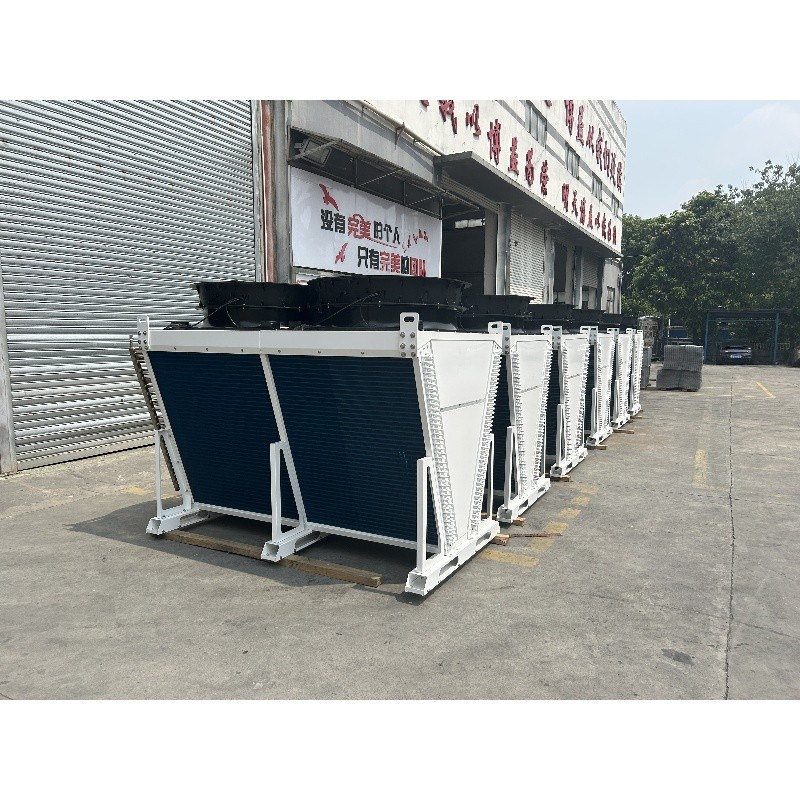
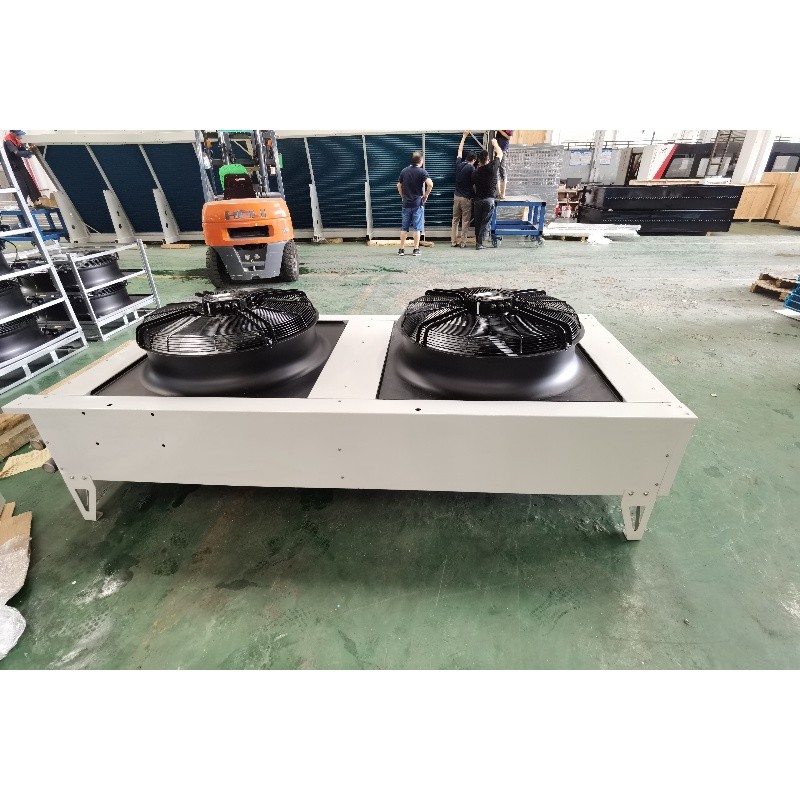
Advanced Features for Optimal Performance: Fans and Control Systems
Beyond the basic structure, advanced technologies in fans and control systems provide another layer of customization that fine-tunes performance and maximizes energy efficiency.
Fan Technology (AC vs. EC): The fans are responsible for moving the vast quantities of air needed for heat rejection, and the type of fan motor used is a critical decision.
- AC (Alternating Current) Fans: These are the traditional, cost-effective option. They typically operate at a fixed speed (either on or off), which can be less energy-efficient under partial load conditions.
- EC (Electronically Commutated) Fans: EC fans are a more advanced technology, using brushless DC motors with built-in intelligent controls. They offer variable speed control, allowing them to precisely match the airflow to the real-time cooling demand. This results in significantly lower energy consumption (up to 70% less than AC fans in some cases), quieter operation, and a longer lifespan. Although their initial cost is higher, the long-term energy savings often provide a rapid return on investment.
Intelligent Control Systems: A sophisticated control system acts as the brain of the dry cooler. Custom solutions can integrate advanced controllers that monitor fluid temperatures and ambient conditions in real time. These systems can automatically adjust fan speeds to maintain a stable outlet fluid temperature while using the minimum amount of energy. This intelligent modulation ensures the system operates at peak efficiency year-round, adapting seamlessly to changing loads and weather. They can also be integrated into larger building or plant management systems for centralized monitoring and control.
Exploring Specialized Dry Cooler Options: Adiabatic Dry Coolers
For applications in hot climates or where cooling fluid temperatures need to be brought closer to the ambient wet-bulb temperature, a specialized option known as an adiabatic dry cooler offers a powerful solution. This technology acts as a hybrid, combining the principles of dry cooling with the boosting power of evaporative cooling, but in a much more efficient and controlled manner than a traditional cooling tower.
An adiabatic cooler is essentially a dry cooler equipped with pre-cooling pads (made of materials like impregnated cellulose) or a misting system. For most of the year, it operates as a standard dry cooler, using only air for heat rejection. However, during periods of high ambient temperature when the dry cooler alone cannot meet the cooling demand, the adiabatic system is activated. A small amount of water is used to dampen the pre-cooling pads or create a fine mist. As the incoming hot, dry air passes through these wet pads or mist, some of the water evaporates. This evaporation process absorbs heat from the air, significantly lowering its dry-bulb temperature before it reaches the dry coil.
Key benefits of adiabatic systems include:
- Enhanced Performance: The pre-cooled air allows the dry cooler to achieve a much higher heat rejection capacity, enabling it to function effectively even on the hottest days.
- Massive Water Savings: Unlike a cooling tower that constantly evaporates water, an adiabatic system only uses water intermittently during peak temperature periods. This can reduce annual water consumption by up to 80% or more compared to fully evaporative systems.
- Reduced Maintenance: Because the water is evaporated into the air before it reaches the heat exchanger coil, the coil itself remains dry. This prevents the scaling, corrosion, and biological fouling associated with wet systems, dramatically reducing maintenance needs and extending the unit's life.
Adiabatic coolers represent the pinnacle of customized cooling, providing a "best-of-both-worlds" solution that delivers high performance with exceptional water and energy efficiency.
Choosing the Right Dry Cooler Manufacturer: A Partnership for Success
The effectiveness of a dry cooler is determined not just by its design, but by the expertise, quality, and support embedded in it by its manufacturer. Selecting a dry cooler is a significant capital investment, and the choice of a manufacturer is as critical as the choice of the technology itself. The right supplier is more than a vendor; they are a long-term partner dedicated to your operational success, providing a solution that is reliable, efficient, and perfectly aligned with your needs.
What to Look for in a Dry Cooler Manufacturer
Navigating the market to find the ideal partner requires a clear set of criteria. A premier dry cooler manufacturer distinguishes itself through a combination of technical prowess, comprehensive service, and a proven track record. Here are the key attributes to evaluate:
Engineering Expertise and Customization Capability: The manufacturer should have a deep and demonstrable understanding of thermodynamics and fluid dynamics. Look for a company with a strong in-house engineering team that can move beyond standard offerings to design and build custom solutions. They should be able to conduct a thorough analysis of your thermal load, environmental conditions, and spatial constraints to engineer a system that delivers optimal performance.
Breadth of Product Range: A manufacturer offering a wide array of configurations (V-shape, flatbed), sizes, and advanced options (like adiabatic systems) is better positioned to provide a solution that truly fits your needs, rather than pushing a limited product line. This indicates a broader expertise and a more client-centric approach.
Manufacturing Excellence: The quality of the final product depends on the manufacturing process. Inquire about their production facilities, the quality of materials used, and their quality control procedures. A manufacturer committed to excellence will use high-grade materials and have rigorous testing protocols to ensure every unit meets stringent performance and durability standards.
After-Sales Support and Technical Service: The relationship should not end after the sale. A reliable manufacturer will provide comprehensive technical support, including installation guidance, commissioning, maintenance advice, and prompt troubleshooting. A responsive and knowledgeable service team is invaluable for ensuring the long-term reliability of your cooling system and minimizing any potential downtime.
Industry Experience and Proven Performance: Look for a manufacturer with a history of successful installations in your industry or in applications with similar demands. Case studies, client testimonials, and a strong portfolio are excellent indicators of a company's ability to deliver on its promises.
The Importance of Quality, Certifications, and Expert Support
In the world of industrial equipment, quality is not just a buzzword; it is the foundation of reliability, safety, and longevity. Certifications from recognized international bodies provide objective proof of a manufacturer's commitment to these principles.
Quality Certifications (ISO): The International Organization for Standardization (ISO) provides a framework for quality and operational excellence. Key certifications to look for include:
- ISO 9001: This is the international standard for a Quality Management System (QMS). An ISO 9001 certification demonstrates that the manufacturer has established processes to consistently provide products that meet customer and regulatory requirements, and that they are committed to continual improvement.
- ISO 14001: This certification is for Environmental Management Systems (EMS). It shows the manufacturer is committed to sustainable practices, such as reducing waste and minimizing their environmental footprint.
- ISO 45001: This standard focuses on Occupational Health and Safety. It indicates the company prioritizes a safe working environment, which often translates to higher quality workmanship.
Expert Support: A manufacturer's expertise is one of its most valuable assets. This support should begin at the design stage, with engineers providing expert advice to ensure the right solution is selected. It should continue through installation and commissioning to optimize performance from day one. And critically, it must be available throughout the equipment's lifecycle for maintenance guidance and rapid issue resolution. This level of expert partnership ensures you maximize your return on investment and maintain operational continuity.
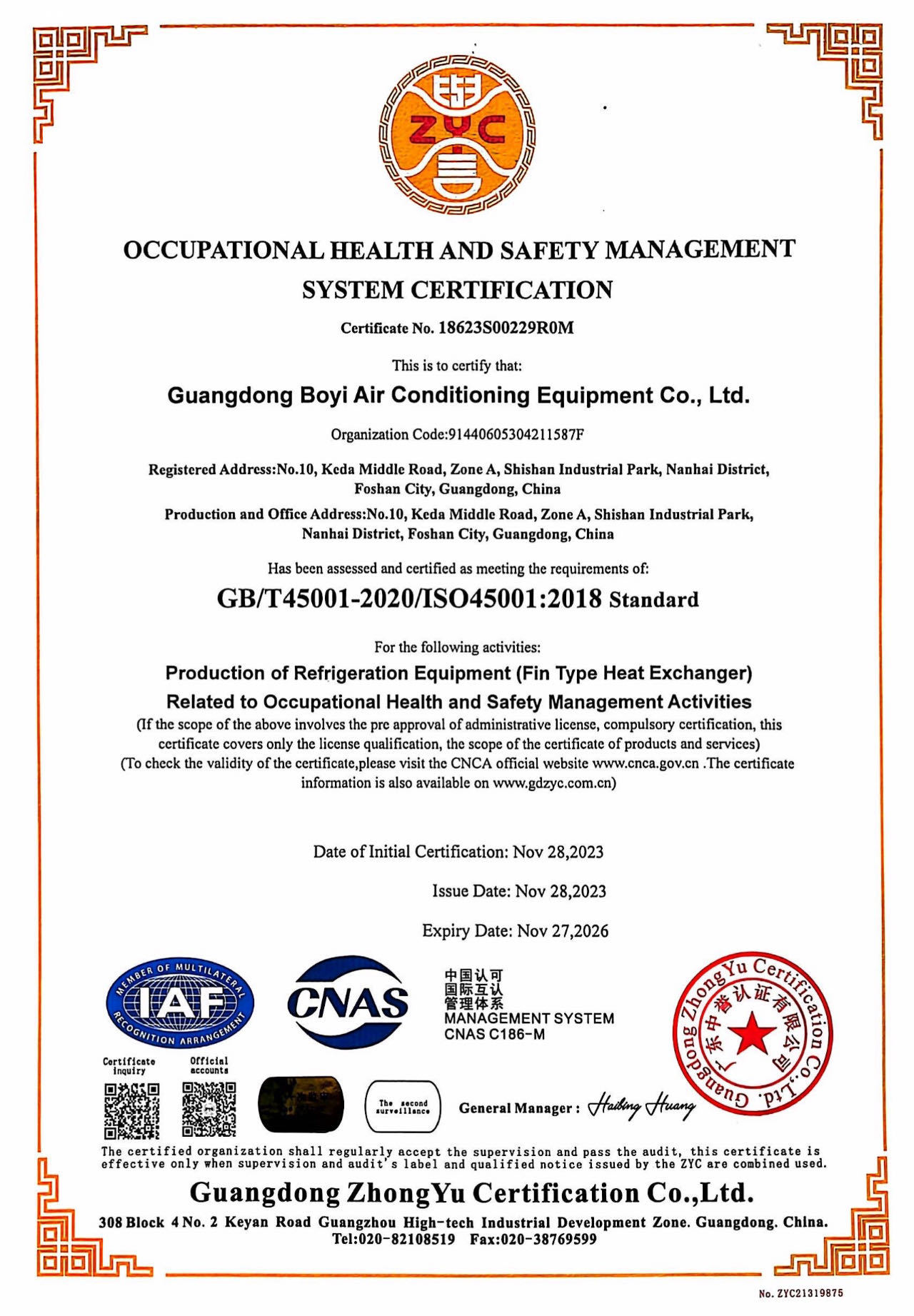
Boyi Cooling: A Leading Dry Cooler Manufacturer in China
Exemplifying these principles is Boyi Cooling, a prominent manufacturer of heat exchange equipment based in China. Since its establishment, Boyi Cooling has demonstrated a deep commitment to solving complex cooling challenges through customized engineering and manufacturing excellence. The company's philosophy centers on integrating robust research and development with precision manufacturing.
Boyi Cooling's strengths align directly with the criteria for a top-tier manufacturer:
- Customized Solutions: They specialize in moving beyond standard products to deliver tailor-made dry coolers that precisely match customer specifications, from materials and dimensions to performance characteristics.
- Quality Assurance: Their operations are backed by a comprehensive management system, including ISO 9001, ISO 14001, and ISO 45001 certifications. This commitment ensures that every product leaving their facility meets the highest standards of quality, environmental responsibility, and safety.
- Proven Reliability: With a track record of units operating smoothly for over 50,000 hours and a reliability rate exceeding 99%, Boyi Cooling has proven its ability to produce durable and dependable equipment.
- Comprehensive Service: They offer a partnership approach, guiding clients from the initial inquiry and design confirmation through to production, quality control, shipping, and dedicated after-sales support.
By embodying these qualities, Boyi Cooling stands as a strong example of a manufacturer that provides not just a product, but a complete and reliable thermal management solution. When selecting a partner for your cooling needs, using these benchmarks will help ensure a successful and lasting investment.
Frequently Asked Questions (FAQs)
1. What is the fundamental difference between a dry cooler and a cooling tower? The primary difference lies in the cooling method. A dry cooler is a closed-loop system that uses ambient air to cool a process fluid through a heat exchanger, without any water evaporation. A cooling tower is an open-loop system that cools water by bringing it into direct contact with air, relying on the principle of evaporation to remove heat. This means dry coolers conserve water and have lower maintenance needs, while cooling towers can sometimes achieve lower water temperatures but consume significant amounts of water and require chemical treatment.
2. Can a dry cooler operate effectively in very hot climates? A standard dry cooler's effectiveness is dependent on the ambient air temperature; it can cool the process fluid to a temperature slightly above the ambient dry-bulb temperature. In very hot climates, this might not be sufficient for some applications. However, this is where specialized adiabatic dry coolers come in. Adiabatic coolers use a fine mist of water to pre-cool the incoming air before it reaches the heat exchanger, which significantly boosts cooling performance on the hottest days while still using up to 80% less water than a traditional cooling tower.
3. What are the main maintenance tasks required for a dry cooler? Maintenance for dry coolers is significantly simpler than for wet cooling systems. The primary tasks include:
- Regular inspection: Visually checking for any signs of damage, corrosion, or leaks.
- Coil cleaning: Periodically cleaning the finned surfaces of the heat exchanger to remove dust, pollen, and other airborne debris that can obstruct airflow and reduce efficiency. The frequency depends on the environmental conditions.
- Fan and motor checks: Ensuring fans are operating smoothly and motors are functioning correctly. Because there is no water evaporation, there is no need for water treatment, chemical management, or cleaning of scale and biological growth.
4. How is a dry cooler sized for a specific application? Sizing a dry cooler is a critical engineering task that involves several factors. A qualified manufacturer will calculate the required capacity based on:
- Heat Load: The amount of heat (in kW or BTU/hr) that needs to be removed from your process or equipment.
- Fluid Parameters: The type of fluid being cooled (e.g., water, glycol mixture), its flow rate, and the required inlet and outlet temperatures.
- Ambient Conditions: The maximum expected ambient air temperature at the installation site.
- Space and Noise Constraints: The available physical space for the unit and any local noise restrictions. Using specialized software, an engineer can then select the optimal combination of coil size, fin configuration, and fan performance to meet these requirements efficiently.
5. What is the typical Return on Investment (ROI) for a dry cooler system? The ROI for a dry cooler varies depending on factors like local electricity and water costs, climate, and the system it is replacing, but it is often very compelling. Key contributors to ROI include:
- Energy Savings: Especially when using efficient EC fans and intelligent controls.
- Water Savings: Complete elimination of water consumption and treatment costs compared to cooling towers, which can amount to thousands of dollars annually.
- Reduced Maintenance Costs: Lower labor and material costs due to the simpler, cleaner operation.
- Increased Uptime: Enhanced equipment reliability prevents costly production downtime. Payback periods can often range from 1 to 3 years, particularly when replacing an inefficient or water-intensive cooling system.
Conclusion
I hope this deep dive into dry cooler technology has illuminated its importance and versatility across a vast spectrum of industrial and commercial applications. The core message is clear: by intelligently leveraging ambient air, these systems offer a powerful, sustainable, and economically sound alternative to traditional cooling methods. From the fundamental principle of heat transfer without water loss to the nuanced benefits of custom-engineered solutions and advanced adiabatic options, the advantages of integrating a high-quality dry cooler into your system are undeniable. They stand as a testament to how innovative engineering can solve critical operational needs while simultaneously achieving significant environmental and financial goals—from preventing costly downtime to conserving precious resources.
Remember, the journey to optimal thermal management begins with a thorough understanding of your unique requirements. Armed with this knowledge, you can forge a crucial partnership with a reputable dry cooler manufacturer that can deliver not just a piece of equipment, but a customized, efficient, and reliable solution built for long-term success. Your equipment's longevity, your operational stability, and your bottom line depend on making this informed choice. If you are ready to explore how a tailored cooling solution can transform your operations, we encourage you to take the next step. Tell us your needs, and let our experts design the perfect dry cooler system for you.