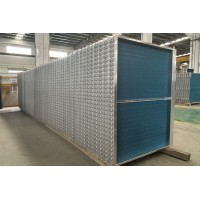
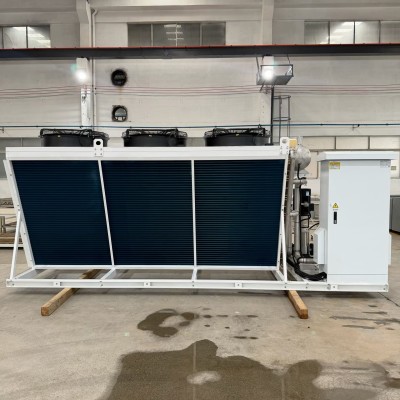
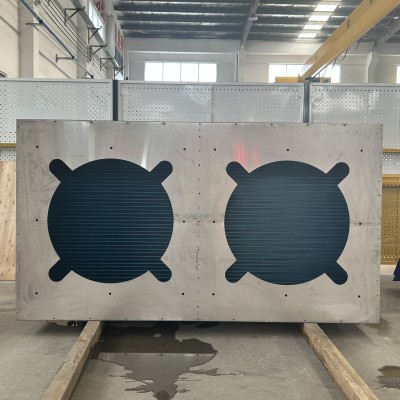
A leading Dutch agricultural group with long experience in high-specification greenhouse projects set out to make year-round, sustainable cultivation work in demanding climates. Temperature and humidity control sat at the heart of the plan. Several suppliers had already tried and failed. Boyi Cooling delivered a customized heating coil and cooling coil system, proved it with a working prototype, and turned a demanding requirement into a reliable, energy-efficient solution.

The Challenge: Where Previous Suppliers Fell Short
For a group whose greenhouse projects must perform in every climate — from cold winters to hot, dry summers — the climate system had to be precise, efficient and dependable around the clock, season after season. Before finding Boyi Cooling, the customer had approached several other suppliers. Every attempt fell short in the same three ways:
- Selection reports that missed the mark. Heat-exchanger selection reports from other suppliers failed to meet the customer's demanding heat-transfer requirements. Proposed systems were undersized or poorly matched to the greenhouse's real thermal load — including extreme seasonal conditions — leaving performance uncertain from the start.
- Prototypes that could not deliver in real operation. Prototype units failed to achieve the actual operating performance required on site. The gap between theoretical specs and real-world results was simply too wide — a risk no grower, and no project partner, can afford.
- A language barrier that blocked understanding. The customer's engineers struggled to convey their exact needs in English, and their ideas were frequently misunderstood, causing rework, delay and frustration.
Why greenhouse climate control is so demanding
Temperature and humidity in a greenhouse are tightly coupled, and small deviations mean large production losses. Low temperatures at night slow photosynthesis and risk frost damage; summer overheating suppresses photosynthesis and causes flower and fruit drop; prolonged high humidity above 90% RH encourages grey mould and downy mildew. With year-round cultivation targets and increasingly strict sustainability goals, heating and cooling are also among the largest operating costs in greenhouse farming — so an efficient, precisely controlled climate system is essential for both profitability and a lower environmental footprint.
The Boyi Cooling Approach: Listening First, Then Engineering
Boyi Cooling's engineers took a fundamentally different approach — one built on listening:
1In-depth communication. Through patient, detailed dialogue with the customer's engineering team, Boyi Cooling confirmed every requirement in detail: greenhouse dimensions, crop type, local climate, target temperature and humidity ranges, and real operating conditions. Nothing was assumed; everything was confirmed.
2Customized system design. A complete solution was engineered around heating coils and cooling coils, each precisely sized to deliver the required heat-transfer capacity with ample margin for real conditions — including extreme seasonal peaks, so the system could support year-round cultivation.
3Prototype testing. Boyi Cooling manufactured a prototype and subjected it to rigorous testing under conditions simulating actual operation. The results were clear: performance fully met, and in several metrics exceeded, the customer's requirements.
4Technical optimization. Using the test data, Boyi Cooling refined and improved the customer's original concept, optimizing heat-transfer efficiency and energy balance to lower operating costs and support the customer's sustainability goals.
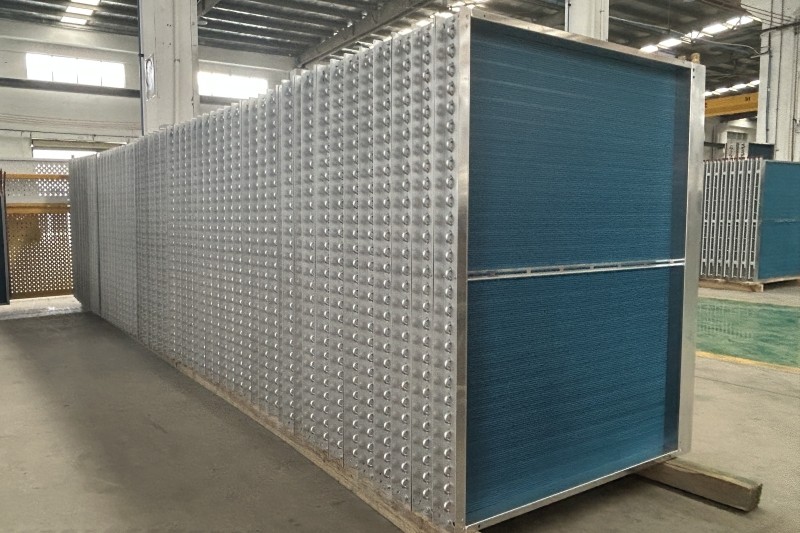
How the Coil System Delivers Sustainable Greenhouse Control
- Maintaining optimal temperatures. Heating coils provide a stable heat source during cold seasons and at night, preventing frost damage and excessive diurnal swings; cooling coils remove excess heat in summer, preventing high-temperature stress and flower and fruit drop.
- Precise humidity control. When humidity climbs too high, the cooling coil surface drops below the dew point and condenses moisture out of the air — curbing grey mould and downy mildew while reducing pesticide use and supporting cleaner, more sustainable cultivation.
- Energy efficiency and stable yields. Coordinated temperature-humidity control creates a stable environment for year-round, high-yield production with significantly lower energy consumption — helping growers meet both economic and environmental targets.
Results & Outcomes
- The prototype achieved performance fully meeting the customer's requirements, confirming the design's reliability under real operating conditions.
- Technical improvements optimized the customer's original solution, delivering better heat-transfer performance, lower energy consumption and a stronger foundation for sustainable cultivation.
- Impressed by product quality and engineering capability, the customer placed a second order and continues to strengthen the partnership.
"Boyi Cooling left a strong impression on us. The production workshop is clean and tidy, with materials and products neatly organized. The production process runs in an orderly manner, and the products deliver stable performance with excellent appearance and welding quality — my overall rating of the product quality is very good. The team responds to emails promptly, understands our requirements precisely, and the after-sales service is very responsive."
Alessandro, Engineer, Leading Dutch Agricultural Group
About Boyi Cooling
Boyi Cooling specializes in the design and manufacture of heat-exchange products, providing temperature and humidity control solutions for greenhouse farming and industrial applications worldwide. If you are facing similar greenhouse climate-control requirements, explore our products or contact us to discuss your project.