Total Cost of Ownership: Calculating the True Cost of Industrial Dry Coolers
When procurement teams evaluate an industrial dry cooler, the first number they see is usually the purchase price. Yet that figure typically represents only 30-40% of the true cost over a 10-to-15-year lifecycle. The remainder hides in energy bills, water consumption, maintenance contracts, downtime events, and end-of-life disposal. Understanding total cost of ownership (TCO) is the difference between a low-price purchase and a high-value investment.
This guide breaks down every TCO component for industrial dry coolers, provides a practical cost-modeling framework, and shows how Boyi Cooling designs equipment that lowers lifetime cost through 20+ years of thermal engineering experience, customized manufacturing, and exports to 30+ countries.
What Is Total Cost of Ownership for a Dry Cooler?
Total cost of ownership is the cumulative cost of acquiring, operating, maintaining, and retiring a piece of equipment. For a dry cooler or air-cooled heat exchanger, TCO is usually expressed over a 10-year horizon because that matches typical depreciation schedules and major maintenance cycles.
The TCO equation can be summarized as:
TCO = CAPEX + OPEX + Maintenance + Downtime Risk + Disposal - Residual Value
Each variable deserves its own line item. Relying on CAPEX alone causes buyers to underestimate energy and reliability costs, while ignoring water savings and redundancy value. A complete TCO view makes the business case for higher-efficiency equipment obvious.
Component 1: Capital Expenditure (CAPEX)
CAPEX covers the equipment price plus directly attributable acquisition costs. These include the dry cooler unit, control panel, variable-speed drives if specified, shipping, import duties, installation labor, commissioning, and initial spare parts.
For large industrial projects, the dry cooler itself may account for 60-75% of first-year cash outflow, with the balance distributed across logistics and integration. Buyers can reduce CAPEX by selecting standard catalog units, but standard designs often force compromises on footprint, capacity, or control strategy that increase OPEX later.
A custom dry cooler from Boyi Cooling can often be optimized for your exact heat load and footprint, eliminating the oversizing that inflates both purchase price and fan energy.
Component 2: Energy Cost and 10-Year Modeling
Energy is the largest single operating cost for most dry coolers. Fan motors run continuously in warm weather, and even small differences in motor efficiency, fan aerodynamics, or control logic compound into large differences over a decade.
To model 10-year energy cost, use the formula:
Cost = Motor Power (kW) × Load Factor × Operating Hours × Electricity Rate ($/kWh)
For example, a dry cooler with 30 kW of installed fan power, operating at 80% average load for 6,000 hours per year, at $0.12 per kWh, consumes approximately $172,800 of electricity annually. Over 10 years, that is $1.73 million, far exceeding typical equipment purchase price.
Key factors that influence energy cost include:
- Fan motor efficiency: Premium-efficiency motors reduce losses by 3-8% compared to standard units.
- Fan aerodynamics: Optimized blade shapes and guard designs improve airflow per watt.
- Coil fin geometry: Lower air-side pressure drop reduces fan power demand.
- Variable-speed control: EC or VFD-driven fans match speed to load instead of running full-on or full-off.
- Ambient design point: Equipment sized for realistic maximum temperatures avoids inefficient oversizing.
Boyi Cooling selects fans, motors, and coil geometries specifically for each project, using thermal-selection software to minimize energy consumption while meeting capacity targets.
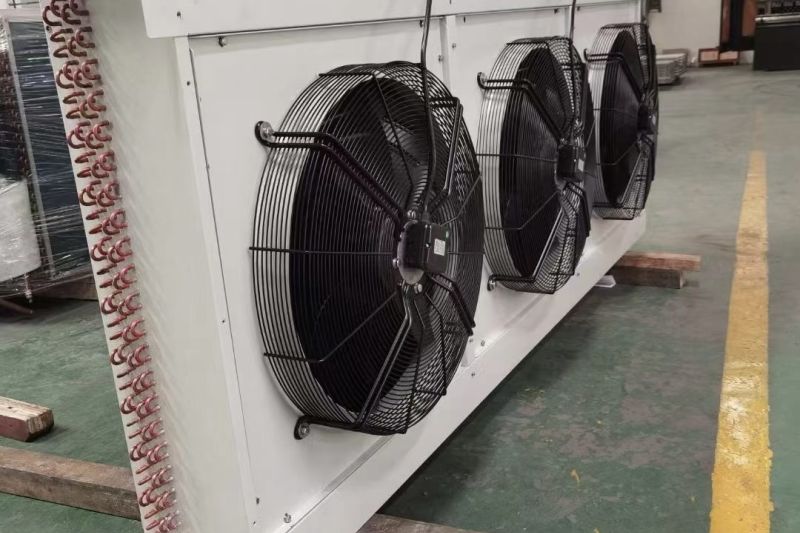
Fan selection and coil geometry are the two biggest levers for controlling long-term energy cost.
Component 3: Water Savings vs. Cooling Towers
One of the strongest TCO arguments for dry coolers is water elimination. Traditional cooling towers evaporate large volumes of water, require chemical treatment, and need periodic blowdown. Dry coolers reject heat directly to ambient air through a closed-loop glycol or water circuit.
A cooling tower in a 1 MW data center can consume 10-20 million liters of water annually, depending on climate and load profile. At typical industrial water and treatment costs, that can exceed $50,000 per year. Dry coolers cut this consumption by up to 95%, saving $400,000 to $700,000 over 10 years while also eliminating chemical handling and blowdown discharge.
| Cost Element | Cooling Tower | Dry Cooler |
|---|---|---|
| Make-up water | High | Negligible |
| Chemical treatment | Required | Minimal |
| Blowdown disposal | Required | None |
| Water quality risk | Scaling, fouling | Closed-loop protection |
| 10-year water cost | $400k-$700k | $20k-$40k |
For buyers in water-scarce regions or under tightening ESG reporting requirements, the water savings alone can justify dry cooler selection before any other TCO component is considered.
Component 4: Maintenance and Reliability Cost
Dry coolers have fewer wearing parts than cooling towers, chillers, or liquid-cooling systems. A well-built unit may only require filter cleaning, fin inspection, fan bearing lubrication, and motor checks. Closed-loop fluid circuits reduce corrosion and fouling, extending coil life beyond 50,000 operating hours.
Maintenance cost drivers include:
- Fan bearing replacement: Typically every 40,000-60,000 hours for quality units.
- Motor replacement: Premium motors often last 50,000+ hours.
- Fin cleaning: Required in dusty or pollen-heavy environments to maintain thermal performance.
- Coil corrosion protection: E-coat or epoxy treatments extend life in aggressive atmospheres.
- Control and sensor calibration: Ensures variable-speed systems maintain setpoints efficiently.
Boyi Cooling uses corrosion-resistant materials, including stainless steel tube options and electrophoretic coatings, to extend maintenance intervals. Our dry coolers are designed for reliability in harsh environments from mining sites to coastal data centers.
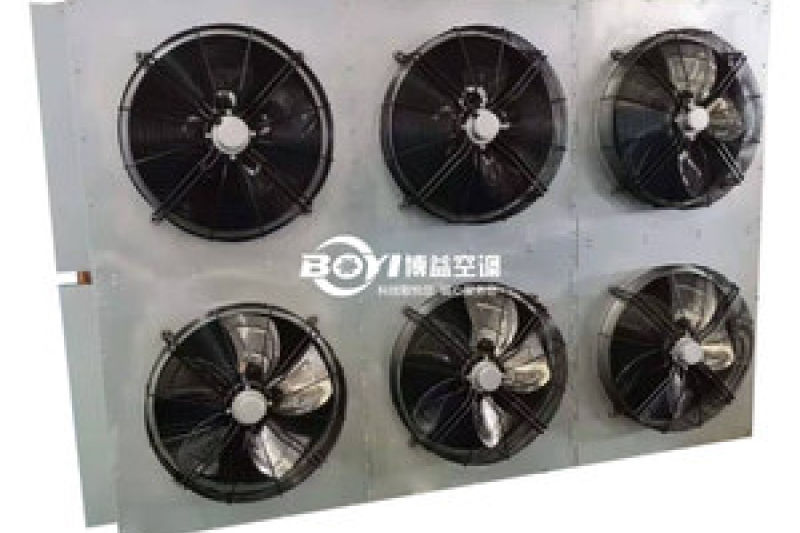
Closed-loop dry cooler designs reduce the corrosion and fouling that drive maintenance spending.
Component 5: Downtime Risk and Redundancy Value
Unplanned downtime is the most expensive TCO line item for mission-critical applications. Data center downtime costs are commonly estimated at $5,000 to $9,000 per minute, and a single dry cooler failure in a high-density compute environment can escalate rapidly.
The cost of downtime risk depends on:
- Application criticality: Data centers, hospitals, and process industries have very high downtime costs.
- Redundancy design: N+1 or N+2 configurations reduce probability of total cooling loss.
- Part availability: Long lead times on proprietary fans or coils extend outages.
- Remote monitoring: Early fault detection prevents minor issues from becoming major failures.
Investing in higher-quality equipment, redundant fan circuits, and smart monitoring can appear to raise CAPEX, but the avoided downtime cost often delivers the highest ROI in the TCO model. Boyi Cooling supports redundancy designs and offers globally sourced standard components to shorten repair times.
Component 6: Variable-Speed Fan ROI
Fans rarely need to run at full speed. By matching airflow to actual heat load, variable-speed fans can reduce energy consumption by 20-35% compared to fixed-speed on-off control. The payback period for EC or VFD upgrades is typically 1-3 years, depending on climate and load profile.
Example payback calculation:
Payback (years) = Additional Cost of Variable-Speed Upgrade / Annual Energy Savings
If a variable-speed upgrade adds $15,000 to equipment cost but saves $12,000 per year in electricity, the payback is 1.25 years. Over 10 years, the net savings exceed $100,000. This is one of the most reliable TCO improvements available in dry cooler design.
Boyi Cooling integrates dry coolers with EC fan and VFD options, paired with temperature-based control logic that maximizes part-load efficiency.
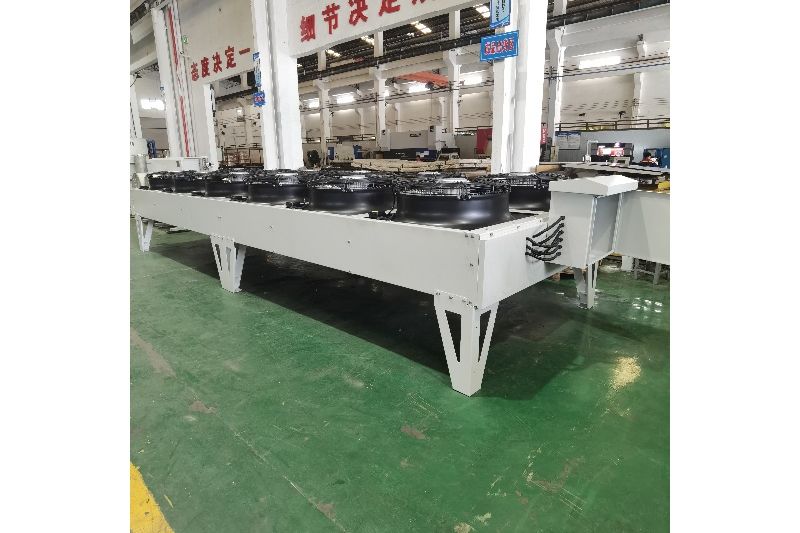
TCO Calculator: A Practical Spreadsheet Framework
Procurement teams can build a simple TCO model in a spreadsheet. The framework below separates first-cost and recurring-cost categories so that different suppliers can be compared on equal terms.
| Line Item | Input | 10-Year Cost |
|---|---|---|
| Equipment CAPEX | Purchase + shipping + install | $ |
| Fan energy | kW × hours × rate × 10 | $ |
| Pump energy | Closed-loop pump power × 10 | $ |
| Water and treatment | Liters × cost × 10 | $ |
| Planned maintenance | Annual contract × 10 | $ |
| Unplanned repairs | Estimated annual risk cost × 10 | $ |
| Downtime risk | Probability × cost/min × minutes | $ |
| Disposal / residual | Scrap value minus removal cost | $ |
| Total 10-Year TCO | Sum of above | $ |
When comparing two quotes, divide each supplier's 10-year TCO by the total rejected heat load (kW) to obtain a normalized cost per kW of cooling. This removes the distortion created by different capacity ratings and makes the true economics transparent.
Case Comparison: Standard vs. Boyi Custom Dry Cooler
Consider a 1 MW data center cooling project evaluated over 10 years. The standard catalog dry cooler has a lower purchase price but uses fixed-speed fans, standard aluminum fins, and no redundancy. The Boyi custom unit adds variable-speed EC fans, stainless steel tube options, and N+1 fan redundancy.
| Cost Component | Standard Catalog Dry Cooler | Boyi Custom Dry Cooler |
|---|---|---|
| CAPEX | $85,000 | $105,000 |
| 10-year energy | $1,850,000 | $1,295,000 |
| 10-year water cost | $0 | $0 |
| 10-year maintenance | $95,000 | $65,000 |
| Downtime risk reserve | $75,000 | $25,000 |
| 10-year TCO | $2,105,000 | $1,490,000 |
In this example, the Boyi custom unit costs $20,000 more upfront but delivers approximately $615,000 in 10-year TCO savings. The savings come primarily from variable-speed fan energy reduction, longer maintenance intervals, and lower downtime risk. This is why experienced buyers evaluate lifecycle cost, not just purchase price.
Component 7: Disposal and Sustainability Credits
End-of-life cost is often overlooked. Dry coolers contain steel, copper, aluminum, and electronic components. Proper dismantling and metal recovery can offset disposal costs or even produce a small residual value. Stainless steel and copper coils have higher scrap value than aluminum-only designs.
Beyond scrap, sustainability reporting is becoming a procurement factor. Equipment that reduces water use, lowers PUE, and supports ESG targets can contribute to corporate carbon and water goals. Dry coolers that improve data center PUE by reducing chiller dependency therefore carry indirect but real financial value.
Checklist for a Defensible TCO Evaluation
Use this checklist when comparing dry cooler proposals to ensure no major cost category is omitted:
- Request 10-year energy models based on local climate data and load profile.
- Confirm whether water treatment, blowdown, or make-up water costs apply.
- Ask for expected fan and motor life, plus recommended maintenance intervals.
- Compare redundancy options and understand single points of failure.
- Include downtime risk cost for mission-critical applications.
- Verify spare part lead times and local service availability.
- Calculate normalized cost per kW of rejected heat across all bids.
- Review material selection for corrosion resistance and scrap value.
A complete evaluation removes the illusion of a bargain created by an artificially low purchase price.
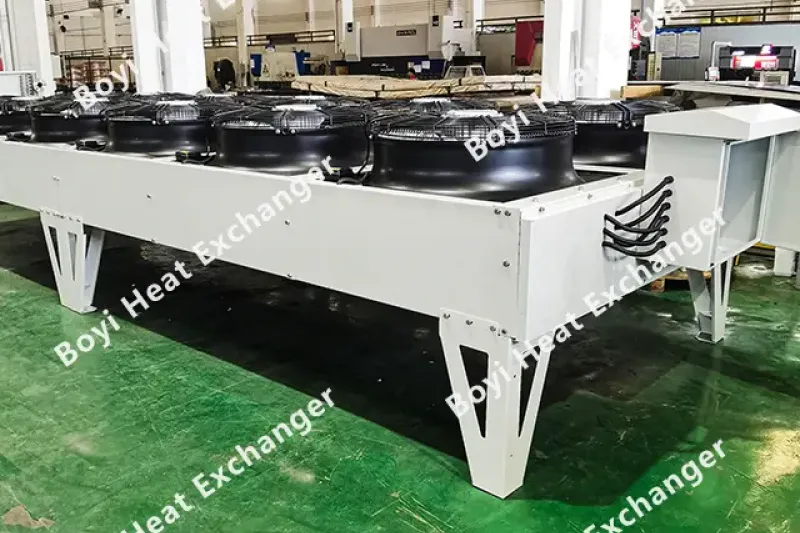
A fleet-level TCO view captures energy, maintenance, and reliability differences that unit price alone cannot reveal.
Conclusion: Invest in Lifecycle Value
The true cost of a dry cooler is not the number on the quotation. It is the sum of purchase, energy, water, maintenance, downtime, and disposal costs over the equipment's operational life. Buyers who model TCO accurately almost always find that higher-quality, custom-engineered equipment pays for itself many times over.
Boyi Cooling supports this decision with thermal-selection software, variable-speed fan options, stainless steel and corrosion-resistant configurations, and global delivery experience. Whether your project is a data center, mining facility, industrial process, or food production plant, our team can help you build a TCO model that justifies the right equipment choice.
Request a TCO-optimized dry cooler quote or contact Boyi Cooling to discuss your heat rejection requirements.