OEM/ODM Heat Exchanger Manufacturing: What Brand Owners Need to Know
OEM/ODM Heat Exchanger Manufacturing: What Brand Owners Need to Know
The global thermal management market is evolving at unprecedented speed. As data centers scale beyond individual megawatts toward campus-level gigawatt deployments, as mining operations push into remote deserts and high-altitude sites, and as HVAC integrators seek reliable dry cooling components for increasingly demanding applications, a fundamental question faces every brand owner and systems integrator: should you build your own heat exchanger manufacturing capability, or should you partner with a specialized OEM/ODM manufacturer who already has the engineering depth, production scale, and quality systems in place?
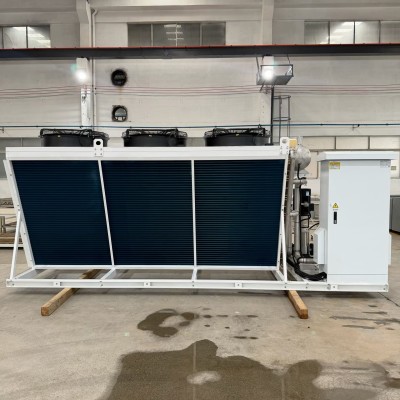
For a growing number of established brands, distributors, and engineering firms, the answer is clear. Contract manufacturing through a proven partner like Boyi Cooling delivers faster time-to-market, lower capital risk, and access to engineering expertise that would take decades to replicate internally. With over 20 years of thermal engineering experience, a factory producing V-type dry coolers, flat-type coolers, condenser coils, and evaporator coils for clients across 30+ countries, Boyi has become a trusted OEM/ODM partner for companies who need to put their own brand on a product that meets exact specifications without bearing the full burden of manufacturing infrastructure.
This guide walks brand owners through everything they need to understand about the OEM/ODM heat exchanger manufacturing landscape, from the fundamental difference between OEM and ODM models, through intellectual property protection, design collaboration, quality consistency, branding options, and a real-world case example, concluding with a practical checklist you can use when evaluating potential manufacturing partners.
OEM vs. ODM: Understanding the Two Manufacturing Models
The terms OEM (Original Equipment Manufacturer) and ODM (Original Design Manufacturer) are often used interchangeably, but they represent fundamentally different relationships between a brand owner and a contract manufacturer. Understanding which model fits your business is the first critical decision in any heat exchanger sourcing strategy.
OEM: Build to Your Design
In an OEM arrangement, the brand owner provides complete engineering drawings, material specifications, performance requirements, and quality standards. The manufacturer—Boyi Cooling in this context—is responsible for translating those specifications into a production-ready process, procuring materials, assembling the heat exchanger, testing it, and shipping it under the brand owner's label. The brand owner retains full ownership of the design and intellectual property. This model is ideal for companies that have in-house engineering teams and need a manufacturing partner with the production capacity, welding capability, and quality systems to execute their designs at scale.
ODM: Boyi Designs, You Brand
In an ODM arrangement, the brand owner specifies the application requirements—cooling capacity, ambient conditions, space constraints, fluid type, and target market—but relies on Boyi's engineering team to design the heat exchanger from the ground up. Boyi's engineers select the fin tube material, calculate fin density, determine the coil circuiting, size the fans, and produce the full 2D and 3D design package. The brand owner reviews, approves, and receives the final product under their own label. This model is ideal for companies entering the dry cooler market without deep thermal engineering expertise, or for established brands that want to expand their product portfolio without growing their engineering headcount.
Hybrid Models: The Best of Both Worlds
In practice, many OEM/ODM relationships operate as hybrids. A brand owner might supply a reference design for a dry cooler but ask Boyi to optimize the fin geometry for a specific climate, or to redesign the coil circuiting for a different fluid. A distributor might have a performance specification but no drawings, making the initial project ODM, while subsequent repeat orders become OEM as the design is now fixed. This flexibility is one of the key advantages of working with a manufacturer like Boyi that has both production capability and a full engineering department under one roof.
Intellectual Property Protection: The Framework That Builds Trust
For most brand owners, intellectual property protection is the single biggest concern when entering an OEM/ODM relationship. You are sharing designs, customer information, pricing structures, and potentially proprietary technology with a manufacturer in another country. Without a robust IP protection framework, the relationship cannot succeed. Boyi Cooling has developed a multi-layered IP protection system that addresses every point of vulnerability in the contract manufacturing relationship.
Mutual Non-Disclosure Agreements
Before any technical information is exchanged, both parties sign a comprehensive NDA that defines what constitutes confidential information, how it may be used, who within each organization may access it, and the remedies for breach. Boyi's standard NDA template has been reviewed by international trade counsel and is available in English. The agreement explicitly prohibits Boyi from manufacturing the same design for other clients and from contacting the brand owner's customers directly.
Confidential Drawing Control
All engineering drawings, 3D models, bill of materials, and performance data are stored in a controlled-access system. Drawings are watermarked with the client's project code, and access is limited to the specific engineers and production supervisors assigned to that project. Drawings are not shared across project teams, and when a project is completed or terminated, the client can request that all digital and physical copies of their drawings be returned or certified destroyed.
Non-Compete and Exclusivity Clauses
For brand owners who require territorial or market exclusivity, Boyi offers non-compete clauses that prevent the manufacturing of identical or substantially similar products for competitors within a defined geography or industry segment. These clauses are negotiated case by case and can be tied to minimum order volumes to ensure both parties have skin in the game.
Data Security Protocols
Boyi maintains segregated data infrastructure for OEM/ODM clients. Customer lists, pricing sheets, and project correspondence are stored on access-controlled servers with audit logging. Email communications with brand owners are conducted through dedicated project email channels, not general sales inboxes. These protocols ensure that even internally, your information is available only to the people who need it to execute your project.
The Design Collaboration Process: From Concept to Production
One of the most significant advantages of partnering with Boyi Cooling for OEM/ODM manufacturing is the depth of the design collaboration process. Unlike a pure contract manufacturer who simply executes drawings, Boyi brings genuine engineering value to every project, whether you arrive with a complete design or just a performance specification.
Initial Consultation and Requirement Gathering
Every project begins with a detailed technical consultation. Boyi's engineering team reviews the application context: what fluid is being cooled, what is the required heat rejection capacity, what are the design ambient conditions, what space is available for installation, what power supply is available for fans, and what are the regulatory requirements for the target market. This information feeds directly into the heat exchanger selection process and ensures that no critical parameter is overlooked.
2D and 3D Design Capability
Boyi's engineering team produces full 2D fabrication drawings and 3D CAD models for every custom project. The 2D drawings define every dimension, weld, material grade, and tolerance. The 3D models allow brand owners and their installation teams to visualize the unit in context, verify clearances, and plan piping connections before a single piece of metal is cut. This design capability is what transforms Boyi from a manufacturer into an engineering partner.
Selection Software and Proposal Optimization
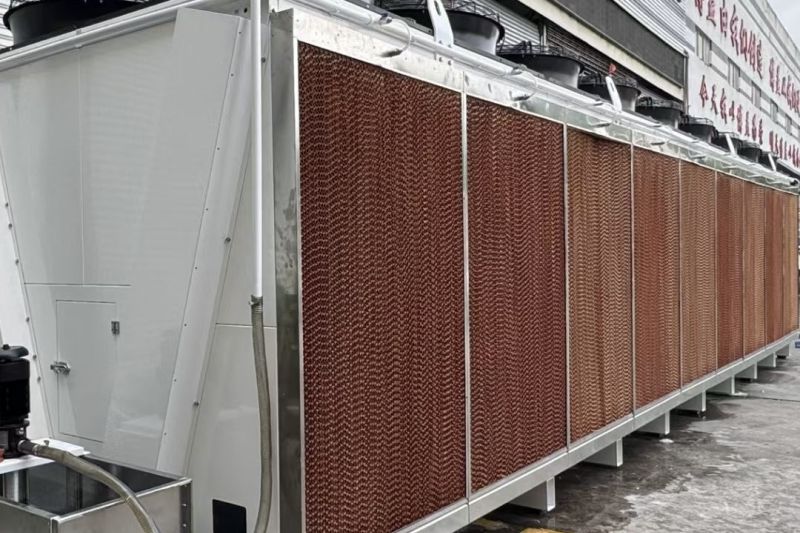
Boyi uses thermal selection software that calculates the required heat transfer surface area, fin density, tube circuiting, and fan configuration based on the specified performance parameters. This software-driven approach means that proposals are optimized for thermal performance and cost, not simply sized by rule of thumb. When a brand owner's specification calls for 2.5 MW of heat rejection at 35 degrees Celsius ambient, Boyi's engineers can present multiple configurations—a standard V-type with stainless steel tubes, a hybrid with copper tubes and aluminum fins, or an adiabatic-enhanced variant with wet pads—and quantify the performance and cost differences for each option.
Prototype and First Article Inspection
For new OEM/ODM projects, Boyi produces a first article unit that undergoes full performance testing before series production begins. The brand owner or their representative is welcome to witness the testing at Boyi's facility. This first article inspection verifies that the manufactured unit meets every dimension, weld quality, pressure test, and thermal performance requirement before series production is authorized. This step eliminates the risk of discovering a systemic issue after a full production batch is complete.
Quality Consistency: Ensuring Every Unit Meets the Same Standard
For brand owners, quality consistency is not just about meeting specifications on the first unit—it is about ensuring that unit number one and unit number one hundred perform identically. A brand's reputation depends on consistency, and Boyi's quality management system is built around three pillars: production standardization, batch testing, and full traceability.
Production Standardization
Every OEM/ODM project begins with a documented production standard: a set of work instructions, welding procedure specifications, material grade certifications, and quality control checkpoints that define exactly how each unit is built. These standards are derived from the approved first article and are locked before series production begins. Any deviation from the standard requires formal engineering change control, ensuring that the units you receive in month six are manufactured to the same process as the units you received in month one.
Batch Testing and Performance Verification
Every heat exchanger undergoes pressure testing to verify tube-to-header joint integrity and coil leak-tightness. For thermal performance verification, Boyi conducts batch performance testing on a statistically significant sample from each production run. This testing measures actual heat rejection capacity against the design specification and provides documented evidence that the production batch meets the contracted performance. Test reports are provided to the brand owner with each shipment.
Traceability Systems
Each unit is marked with a unique serial number that links to a production record containing the material heat numbers, welder certifications, inspection records, and test results for that specific unit. This traceability means that if a field issue arises years later, the entire production history of that unit can be retrieved and analyzed within hours. For brand owners selling into regulated markets or supplying equipment under warranty, this level of traceability is not a luxury—it is a requirement.
Branding Options: Making the Product Yours
For brand owners, the ability to present a product under their own brand identity is the entire point of OEM/ODM manufacturing. Boyi Cooling offers comprehensive branding customization that extends far beyond simply putting a different logo on the nameplate.
Custom Labeling and Nameplates
Boyi produces custom nameplates, data plates, and model number labels to the brand owner's specification. This includes the brand logo, model numbering system, technical specifications, serial number, and regulatory markings. Nameplate materials and attachment methods can be specified to meet the environmental conditions of the target market, whether that means stainless steel plates for corrosive environments or adhesive labels for indoor installations.
Custom Packaging
Export packaging can be branded and customized to the brand owner's logistics requirements. This includes custom crate marking, barcoded shipping labels compatible with the brand owner's warehouse management system, protective materials specified by the brand owner, and documentation enclosed in branded packaging. For brand owners who re-ship to their own customers, Boyi can prepare units for direct drop-shipment with the brand owner's paperwork and packing slips included.
Custom Documentation
Operation and maintenance manuals, installation guides, and test certificates can be produced under the brand owner's name and formatting standards. Boyi's technical writing team works with the brand owner to ensure that documentation reflects the brand's voice and meets the language and regulatory requirements of all target markets. Digital documentation can be delivered in the brand owner's preferred format for their website or customer portal.
Shipping Marks and Logistics
Shipping marks, carton labels, and container loading plans can be customized to integrate with the brand owner's supply chain. Boyi supports vendor-managed inventory arrangements, scheduled production releases, and coordinated shipping to multiple distribution centers. This logistics flexibility is particularly valuable for brand owners managing inventory across multiple regional markets.
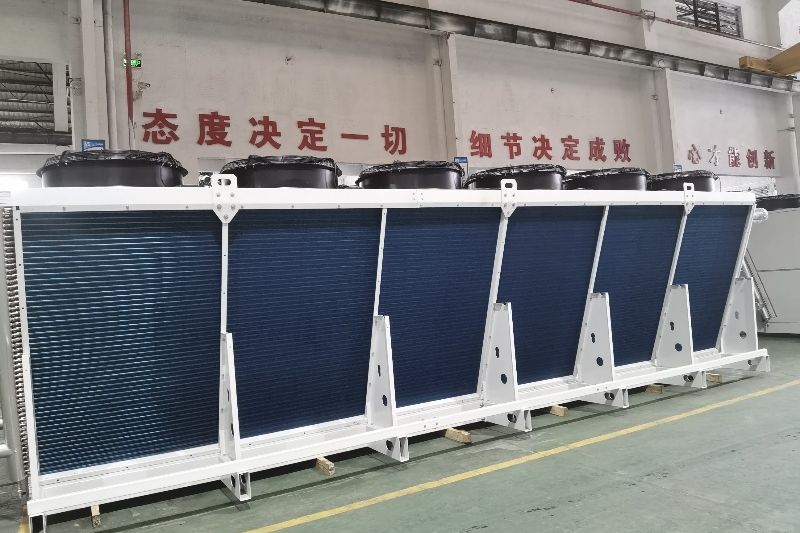
Case Example: OEM V-Type Dry Coolers for the Mining Industry
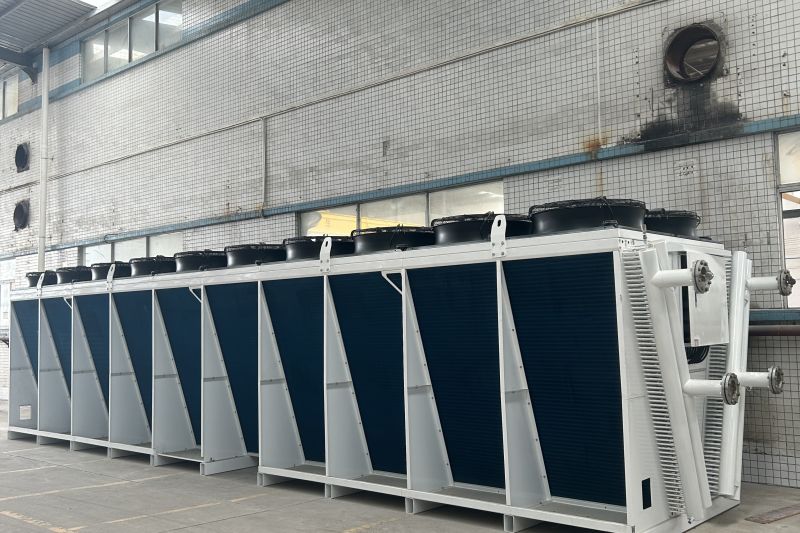
To illustrate how the OEM/ODM process works in practice, consider a project that Boyi Cooling recently completed for a brand owner serving the mining industry. The client was an established equipment distributor in the mining sector who needed to offer a V-type dry cooler under their own brand to mining operations in remote locations. They had a performance specification—3.0 MW heat rejection, ambient temperatures up to 42 degrees Celsius, stainless steel tube construction for corrosion resistance, and copper tube aluminum fin OEM configuration for thermal efficiency—but no engineering drawings.
The project began with an ODM engagement. Boyi's engineering team reviewed the performance specification and the installation context: the coolers would be deployed at mining sites with high dust loads, limited maintenance access, and no reliable water supply for evaporative cooling. The engineering team proposed a V-type configuration with stainless steel tubes for durability, aluminum plate fins for efficient heat transfer, and EC fans with IP55 protection rated motors for dusty environments. The team also recommended an adiabatic pre-cooling pad option for peak summer conditions, giving the brand owner a premium-tier product differentiator.
After the brand owner approved the design, Boyi produced the full 2D fabrication drawings and 3D CAD models. The first article unit was manufactured and underwent full performance testing, including thermal capacity verification at simulated ambient conditions, pressure testing of the coil assemblies, and vibration testing to simulate transport and operation in mining environments. The brand owner's technical representative witnessed the testing and signed off on the first article.
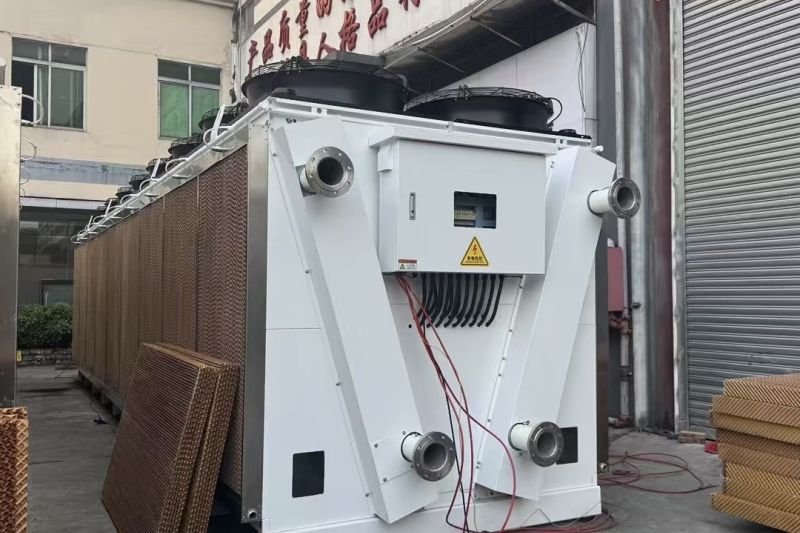
Series production was then authorized. Boyi produced the units under the brand owner's label, with custom nameplates, model numbers, and documentation. The units were packaged in export-grade crates with the brand owner's shipping marks and shipped directly to the mining site. The entire project, from initial consultation to first delivery, was completed in under 12 weeks. The brand owner has since placed repeat orders, transitioning the relationship from ODM to OEM as the design is now fixed and standardized.
This case demonstrates the full value of the OEM/ODM partnership: the brand owner gained a product they could sell under their own brand without investing in engineering or manufacturing infrastructure, Boyi delivered a product that met every performance requirement with documented quality, and the end customer at the mining site received a reliable cooling solution backed by a reputable brand. To learn more about how Boyi supports brand owners, visit the About Us page.
Checklist for Brand Owners: Key Questions to Ask Your OEM/ODM Partner
If you are evaluating potential OEM/ODM heat exchanger manufacturing partners, the following checklist will help you assess whether a manufacturer has the engineering depth, quality systems, and business practices to protect your brand and deliver consistent products. Print this list, take it to your factory audit, and do not accept vague answers to any of these questions.
Engineering Capability
Does the manufacturer have an in-house engineering team capable of producing 2D fabrication drawings and 3D CAD models? Can they perform thermal selection calculations using engineering software rather than rule-of-thumb sizing? Do they have documented experience with the materials, tube types, and fin configurations your products require? Can they provide reference designs or case studies from similar projects?
Quality Management System
Is the manufacturer ISO 9001 certified, and can they provide the certificate and scope of certification? Do they have documented work instructions for every production process? Is there a formal first article inspection process? What is the statistical sampling plan for batch performance testing? Are test reports provided with every shipment, and do they include actual measured values, not just pass or fail marks?
IP Protection Practices
Will the manufacturer sign a mutual NDA before technical information is exchanged? How are confidential drawings stored and access-controlled? Is the manufacturer willing to include non-compete clauses for specific markets or product types? What happens to drawings and tooling if the relationship ends? Can the manufacturer provide references from other OEM/ODM brand owners who can speak to their IP protection practices?
Production Capacity and Lead Time
What is the realistic production lead time for your expected order volumes? Can the manufacturer scale production if demand increases? What is the maximum unit size they can manufacture and ship? Do they have experience with export packaging and shipping to your target markets? What contingency plans exist if a production delay occurs?
Branding and Documentation
Can the manufacturer produce custom nameplates, documentation, and packaging to your specification? Do they support multi-language documentation? Can they accommodate direct drop-shipment to your customers with your paperwork? How do they handle warranty claims and field failure analysis for OEM/ODM products?
Communication and Project Management
Who is your dedicated project manager, and how quickly do they respond to inquiries? Is there a formal project milestone process with documented deliverables at each stage? How are engineering changes handled and communicated? Does the manufacturer proactively flag potential issues, or do they wait for you to discover them? Communication quality during the evaluation phase is a strong predictor of communication quality during production.
Conclusion: Building a Partnership That Lasts
Choosing an OEM/ODM heat exchanger manufacturing partner is one of the most consequential supply chain decisions a brand owner can make. The right partner brings engineering expertise that reduces your design risk, production capacity that scales with your business, quality systems that protect your brand reputation, and IP protection practices that safeguard your competitive advantage. The wrong partner can deliver products that fail in the field, erode your brand equity, and create legal and commercial headaches that take years to unwind.
Boyi Cooling has spent over 20 years building the engineering capability, quality systems, and business practices that brand owners need. With products deployed across 30+ countries, a factory equipped for custom V-type dry coolers, flat-type coolers, condenser coils, and evaporator coils, and an engineering team that treats every project as a collaboration rather than a transaction, Boyi is positioned to be the manufacturing partner that helps your brand grow. Whether you arrive with a complete design ready for production or a performance specification that needs engineering, the process begins with a conversation. Contact Boyi Cooling today to discuss your OEM/ODM heat exchanger manufacturing needs.