Heat Exchanger Certifications and Standards: What Buyers Need to Verify
When a cooling system fails an inspection or stops at a customs checkpoint, the problem is almost never the heat transfer engineering. It is the paperwork behind the equipment. Heat exchanger certifications and standards are the difference between a dry cooler that ships cleanly to Frankfurt and a unit that sits in a bonded warehouse for six weeks while lawyers exchange emails. This guide explains the certifications that actually matter when sourcing dry coolers, heat exchangers, and condenser coils for data centers, industrial process plants, and mining operations, and shows buyers how to verify that each certificate is genuine.
Why Certifications Matter in Heat Exchanger Procurement
Engineers tend to focus on thermal performance, materials of construction, and dimensional tolerances. Procurement teams worry about total cost of ownership. But when a container arrives at a foreign port, the question on the inspector's clipboard is rarely "what is the heat transfer coefficient?" It is "show me the certificate of conformity."
Certifications serve four practical purposes for buyers of industrial heat exchangers and dry coolers:
Four Functions of Equipment Certification
- Safety assurance: Independent verification that pressurized components, electrical panels, and rotating equipment meet recognized safety criteria before they enter service.
- Regulatory access: Many markets (EU, North America, several Middle East and Gulf states) require specific marks before equipment can be legally sold, installed, or commissioned.
- Warranty protection: Manufacturers typically void warranties on equipment that has been modified outside the certified scope. Certification pins down what "as shipped" means.
- Liability limitation: Certified equipment distributes risk between supplier, installer, and end user. When something goes wrong, the investigation starts from a defined compliance baseline.
For industrial buyers, certifications are not decorative marketing stamps. Each certificate represents an audit, a test report, or a quality system review that a third party has invested real engineering hours in. A 2.5 MW V-type dry cooler built for a hyperscale data center typically carries a stack of seven to ten separate documents when it leaves the factory floor. A 60 kW copper tube unit for chemical processing will carry fewer, but each one still has a specific role.
If you are evaluating suppliers for the first time, request their certification register up front. Experienced manufacturers, including Boyi Cooling with more than twenty years in thermal equipment manufacturing, keep a standardized dossier for each shipping configuration. The rest of this article walks through every certificate you are likely to encounter and shows you how to confirm each one is real.
ISO 9001: The Quality Management Foundation
ISO 9001 is the most frequently referenced certificate in heat exchanger procurement and also the most commonly misunderstood. ISO 9001 is not a product certificate. It certifies that a manufacturer operates a documented quality management system covering design, purchasing, production, inspection, and corrective action. The certificate is issued to the company, not to any individual dry cooler or condenser coil.
For buyers, an ISO 9001 certificate tells you three things about a heat exchanger supplier:
What ISO 9001 Confirms
- Documented design and change control procedures
- Calibrated inspection and test equipment
- Traceable material certifications for incoming tubing, fins, headers, and fasteners
- Records of nonconformance and corrective action
- Management review and continual improvement processes
- Internal audits at planned intervals
What It Does Not Confirm
- That any specific unit performs to a stated duty
- That welders are qualified to ASME Section IX
- That pressure vessels meet ASME BPVC criteria
- That the product can be sold legally in any specific market
- That the supplier is the best in its category
When verifying an ISO 9001 certificate, three details deserve attention. First, confirm the certificate scope explicitly lists heat exchangers, dry coolers, or thermal equipment (some online trading companies hold ISO 9001 certificates scoped to "general trading" rather than manufacturing). Second, confirm the issuing body is an accredited certification body, ideally a member of the International Accreditation Forum (IAF). Third, check the certificate number against the issuing body's online database. Reputable certifiers publish an active register.
Boyi Cooling operates under ISO 9001:2015 certified quality management covering design, production, and after-sales support for dry coolers, heat exchangers, and finned tube coils. The certificate scope, issuing body, and current validity can be confirmed directly through the certification body and upon request to the Boyi quality team.
ASME BPVC: Pressure Vessel Certification for High-Pressure Applications
The ASME Boiler and Pressure Vessel Code (BPVC) is the governing standard for unfired pressure vessels in the United States and much of the Americas, the Middle East, and parts of Asia. Heat exchangers operating above atmospheric pressure, including most shell-and-tube condensers, many plate heat exchangers in process service, and certain designs with pressurized headers, fall under BPVC Section VIII.
ASME certification is granted at three levels, indicated by stamps held by the manufacturer:
ASME Stamp Levels
- U Stamp: Manufacturer is authorized to design, fabricate, and assemble pressure vessels in accordance with ASME Section VIII Division 1.
- UM Stamp: Manufacturer is authorized to fabricate only; design is supplied by a separate U Stamp holder.
- R Stamp: Manufacturer is authorized to repair or alter existing pressure vessels and to recommission them under ASME rules.
A heat exchanger manufacturer is required to hold both U and R stamps when building new pressure vessels and offering field service on existing units. The stamp certificate lists the manufacturer's name, location, scope, and validity period. Each pressure vessel leaving the shop carries a nameplate with the applicable stamp and the manufacturer's serial number, which ties back to the ASME Data Report (typically a U-1 or U-2 form).
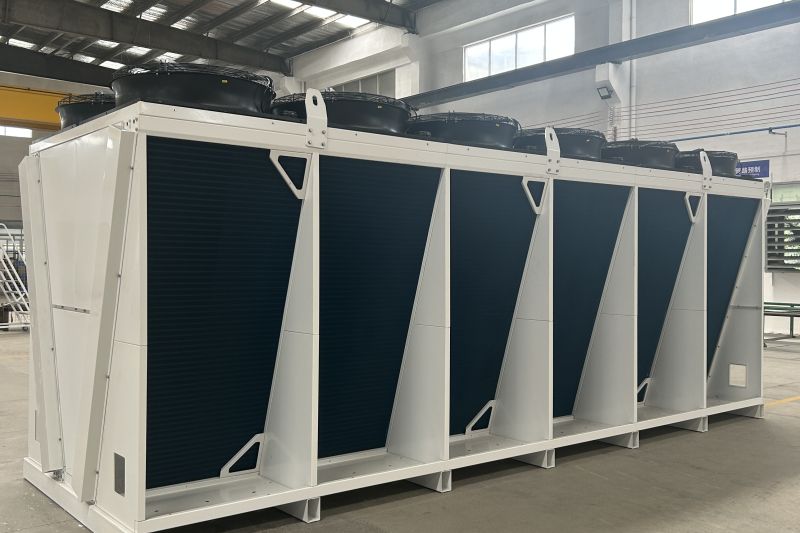
For dry coolers specifically, most atmospheric V-type and flat-type units for data center, mining, and process cooling operate at modest pressures that fall outside the BPVC scope. When this is the case, the manufacturer should explicitly state "non-pressure vessel, not within ASME BPVC scope" in the documentation. Reputable suppliers do not leave this ambiguous. When a manufacturer claims ASME certification, the scope should match the equipment being supplied, including:
- Maximum allowable working pressure (MAWP)
- Design temperature range
- Joint efficiency used in calculations
- Radiography requirements (if any)
- Post-weld heat treatment (PWHT), when applicable
CE Marking for Heat Exchangers Sold in the European Union
The CE mark is mandatory for most industrial equipment placed on the EU market. It is not a quality mark; it is a declaration by the manufacturer (or authorized representative) that the product complies with all applicable European directives. For a heat exchanger, the relevant directives typically include:
Pressure Equipment Directive (PED 2014/68/EU)
The PED categorizes pressure-bearing equipment into risk categories (I through IV) based on pressure, volume, and fluid type. The category determines the conformity assessment route, whether it is self-declaration, third-party inspection, or full quality assurance by a notified body. Most large dry coolers with significant water or glycol inventories trigger Category II or III, which requires a notified body certificate.
Machinery Directive (2006/42/EC) and Low Voltage Directive (2014/35/EU)
When the heat exchanger is integrated with fans, pumps, motors, or control panels, the assembly falls under the Machinery Directive. Electrical components must comply with the Low Voltage Directive, and noise emissions are governed by the Outdoor Noise Directive (2000/14/EC) when the unit operates outdoors.
A heat exchanger manufacturer exporting to the EU should provide, at minimum:
- EU Declaration of Conformity listing each applicable directive and the harmonized standards used
- Notified body certificate for PED (when required)
- Technical file retained by the manufacturer for ten years after the last unit is placed on the market
- Operating and maintenance instructions in the official language(s) of the destination country
Two warning signs deserve attention. First, a CE mark without an accompanying Declaration of Conformity is meaningless. Second, the four-digit notified body number must be printed next to the CE mark when PED Category II or higher applies. Self-declared CE marks on Category II+ equipment are technically non-compliant.
Boyi Cooling supplies CE marked dry coolers, condenser coils, and heat exchangers for European customers, with full technical files maintained at the factory.
UL Listing for North American Safety Standards
In the United States and Canada, safety certifications come primarily from Underwriters Laboratories (UL) and the Canadian Standards Association (CSA). UL listing is particularly relevant for heat exchangers used in:
Typical UL/CSA Applications
- Heat exchangers and refrigerant coils that form part of a UL-listed HVAC assembly (under UL 1995, UL 60335-2-40, or UL 411)
- Electric heating and cooling coils in packaged air handlers under UL 1996
- Control panels for industrial heat exchangers under UL 508A
- Electrified anti-frost or de-icing trace heating under UL 515
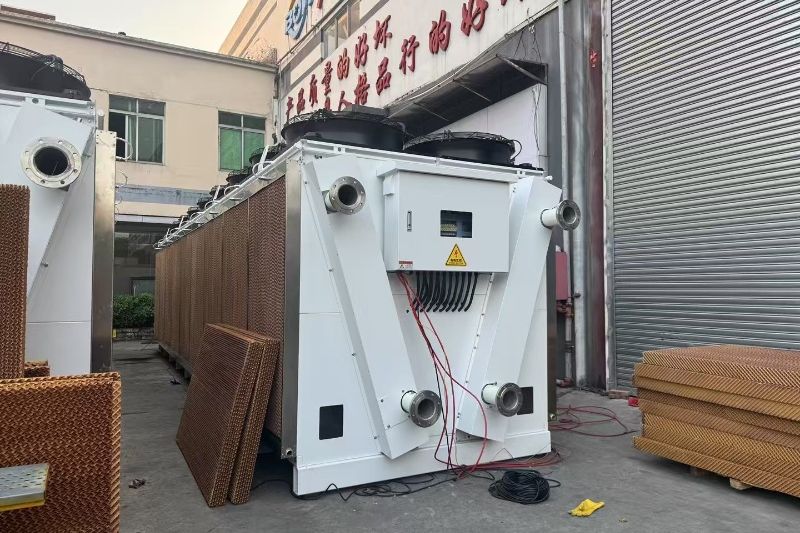
For dry coolers specifically, the most common UL involvement is in the electrical control panel and the fan motor assembly rather than the pressure-bearing shell. UL 508A covers industrial control panels, while UL 1004 covers electric motors. Panel builders can be UL listed even when the heat exchanger itself is not, but in packaged equipment the boundary is often blurred.
For buyers importing dry coolers into the United States or Canada, ask for the UL file number for any integrated controls. Verify it on UL's Product iQ database. A legitimate UL listed panel will resolve there. The same applies to CSA: a cUL or CSAus mark indicates dual certification for both countries through the U.S.-Canada agreement.
North American electrical codes additionally require that field wiring terminations, overcurrent protection, and disconnect means follow the National Electrical Code (NEC) and Canadian Electrical Code (CEC). Manufacturers supplying the North American market integrate those requirements into their standard panel designs; requesting the relevant UL/CSA file numbers and short-circuit current ratings (SCCR) up front is standard practice.
RoHS Compliance: Hazardous Substance Restrictions
The Restriction of Hazardous Substances Directive (RoHS 2011/65/EU and its 2015/863 amendment) restricts the use of lead, mercury, cadmium, hexavalent chromium, and certain phthalates in electrical and electronic equipment. For heat exchangers, RoHS primarily affects:
- Lead-free solder in copper tube headers, manifolds, and connections
- Cadmium-free surface coatings on steel components
- Hexavalent chromium-free plating on fasteners and frames
- Phthalate-free insulation on electric trace heaters and motor windings
For purely thermal units without electrical components (basic finned tube coils, atmospheric dry coolers without fans or controls), RoHS does not formally apply. The moment a fan motor, control board, sensor, or electric heater is integrated, RoHS enters scope.
Buyers shipping to the EU, the UK, California, and a growing list of other jurisdictions should request explicit RoHS compliance statements. A signed declaration listing each restricted substance and the analytical method used to verify compliance (typically XRF screening plus ICP confirmation for borderline readings) is the standard expectation. RoHS documentation has no expiration date, but compliance testing should be repeated when materials or suppliers change.
AHRI Performance Certification: Thermal Verification
The Air-Conditioning, Heating, and Refrigeration Institute (AHRI) runs independent performance certification programs for HVAC and refrigeration equipment. The most relevant program for heat exchangers is the AHRI Certified Ratings program for liquid-to-air and liquid-to-liquid heat exchangers, which verifies that a manufacturer's published thermal performance data is reproducible at an independent lab.
AHRI certification matters in two scenarios:
- Engineers specifying AHRI Certified products for U.S. government, healthcare, education, or other projects where procurement rules require certified performance.
- Designers using AHRI selection software to size heat exchangers; the software pulls only from certified ratings, so a non-certified product cannot be compared apples-to-apples.
For most dry coolers, AHRI coverage is more limited than for refrigerant coils, but the certification principles are similar. When AHRI certification is requested and not available, a manufacturer can offer equivalent third-party witness testing at an accredited lab (such as a heat exchanger test rig per AHRI 410 or EN 305). Boyi Cooling arranges factory acceptance testing (FAT) with calibrated heat balance instrumentation for all critical export orders, including witnessed tests by independent inspectors when customers require them.
IP Protection Ratings for Outdoor Heat Exchangers
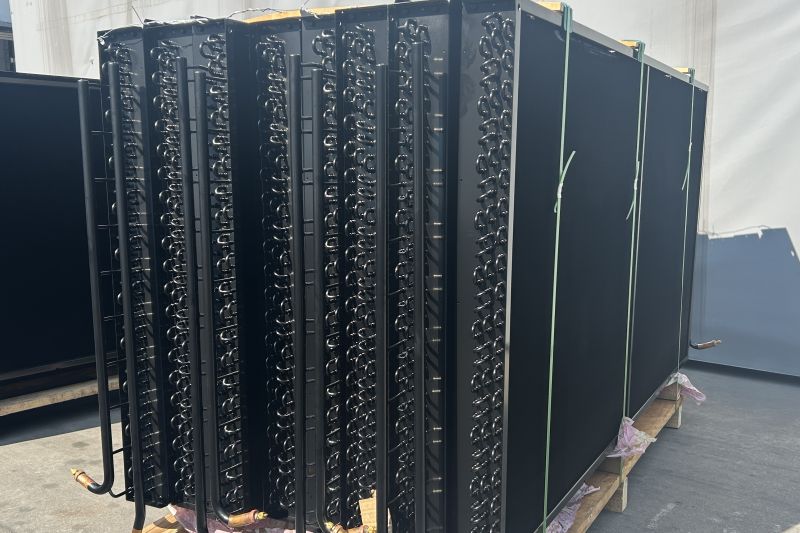
Outdoor dry coolers, condenser coils, and process heat exchangers exposed to weather, dust, or hose-directed water all need a defined Ingress Protection (IP) rating per IEC 60529. IP ratings take the form IP plus two digits:
First Digit: Solid Particle Protection
- 0: No protection
- 3: Tools and thick wires (> 2.5 mm)
- 4: Tools, wires, small fasteners (> 1 mm)
- 5: Dust protected (limited ingress permitted)
- 6: Dust tight (no ingress)
Second Digit: Water Protection
- 0: No protection
- 3: Spraying water (up to 60 degrees from vertical)
- 4: Splashing from any direction
- 5: Jetting from any direction (12.5 mm nozzle)
- 6: Powerful jetting (12.5 mm, 100 L/min)
- 7: Temporary immersion (1 m, 30 min)
For data center dry coolers installed outdoors, IP55 is the most common specification. The first 5 indicates dust protection sufficient to keep the unit operational in desert, mining, or industrial environments; the second 5 indicates resistance to hose-directed water during wash-down or heavy rain. Higher ratings (IP65, IP66) provide additional margin for coastal or heavy-industry sites.
Buyers often see manufacturers claim IP55 or IP66 on dry cooler data sheets. Confirm the rating applies to the entire assembled unit, not just the fan motor. The fan motor typically carries its own IP rating (commonly IP54 or IP55), while the rest of the enclosure (control panel, junction box, sensor housing) must be assessed separately. A complete heat exchanger datasheet should show a coverage matrix, not a single global number.
ASHRAE Standards for Data Center and HVAC Cooling
The American Society of Heating, Refrigerating and Air-Conditioning Engineers (ASHRAE) publishes standards that govern how cooling equipment is designed, specified, and operated. ASHRAE standards are not certifications for products; they are technical references that procurement specifications cite by name.
For heat exchanger and dry cooler selection, the most referenced ASHRAE documents include:
Key ASHRAE References
- ASHRAE 90.1 (Energy Standard for Buildings): Sets minimum efficiency requirements for HVAC equipment, including heat exchanger approach temperature and air-side pressure drop limits. Required by code in most U.S. jurisdictions.
- ASHRAE 90.4 (Energy Standard for Data Centers): Specifies mechanical load allowances and minimum IT-to-cooling efficiency targets for data centers. Drives selection of high-density dry cooler configurations.
- ASHRAE TC 9.9 (Thermal Guidelines for Data Processing Environments): Recommended temperature and humidity ranges (typically 18-27 degrees Celsius inlet for ASHRAE A1-A4 classes). Forms the design envelope for any dry cooler feeding a data center.
- ASHRAE 41 (Standard Methods for Temperature Measurement): Defines measurement procedures used in factory acceptance testing of heat exchangers.
- ASHRAE 140 (Building Thermal Envelope and Fabric Load Tests): Indirectly affects cooling loads and therefore heat exchanger sizing.
For data center dry cooler selection, the relationship between ASHRAE TC 9.9 inlet recommendations, ASHRAE 90.4 mechanical allowance caps, and ASHRAE 90.1 efficiency baselines is what determines equipment specification. A qualified manufacturer should be familiar with all three. Buyers commissioning multi-megawatt data center cooling should specify ambient envelope (ASHRAE class), redundancy (N+1, N+2), and free cooling hours per year. The manufacturer can then derive dry cooler capacity, fan count, control logic, and turndown capability.
How to Verify a Heat Exchanger Certificate
A certificate is only useful if it is real. Counterfeit ISO certificates, self-printed CE marks, and expired ASME stamps all turn up in industrial supply chains. A practical seven-step verification takes less than ten minutes per document:
Certificate Verification Workflow
- Request the original PDF directly: Ask the supplier for a PDF copy of the certificate (not a scan of a scan). Reputable manufacturers maintain digital originals.
- Identify the issuing body: Every legitimate certificate comes from a recognized third party. Search the body's website for the issuing office and accreditation status.
- Confirm scope and validity: The certificate should list scope (products covered), validity period, certificate number, and issue date.
- Cross-check the database: Major certifiers (BSI, TUV, SGS, DEKRA, DNV, BV, UL, CSA, NRC) maintain searchable online registers. If the certificate number does not resolve, treat it as suspect.
- Confirm IAF or regional accreditation: For ISO certificates, confirm the issuing certifier is accredited by an IAF member (such as UKAS, ANAB, DAkkS, or CNAS). Accreditation chains can be traced at www.iaf.nu.
- Verify the manufacturer's address: The certificate should list the manufacturer's actual operating address. A mismatch (especially a foreign supplier claiming a U.S. or EU address on the certificate) is a red flag.
- Request serial-number tie-back: For ASME, PED, and AHRI, each individual unit should tie back to the certificate through a manufacturer serial number and data report.
Two additional telltales identify forged documents. First, font, layout, and color banding often differ from the certifier's standard template. Second, the certificate validity period is sometimes implausibly long (ISO 9001 certificates are typically issued for three years with annual surveillance audits). When something looks off, escalate to the issuing certifier; they will normally confirm or deny authenticity within a business day.
Boyi Cooling: Certifications and Quality Backing
Boyi Cooling has manufactured dry coolers, heat exchangers, and finned tube coils for more than two decades. The company now exports to over thirty countries across the data center, mining, chemical, food and beverage, and HVAC sectors. That export volume is built on a consistent certification foundation:
- ISO 9001:2015 quality management covering design, production, and after-sales service
- CE marking for European Union shipments, with full technical file retention
- PED compliance assessments by notified bodies where product category requires it
- UL listed control panels for North American data center and HVAC integrations
- RoHS compliant materials and processes across the product range
- Compliance documentation packages aligned with ASHRAE TC 9.9 data center cooling standards
- In-house factory acceptance testing with calibrated instruments, plus independent witness testing on request
Featured Product
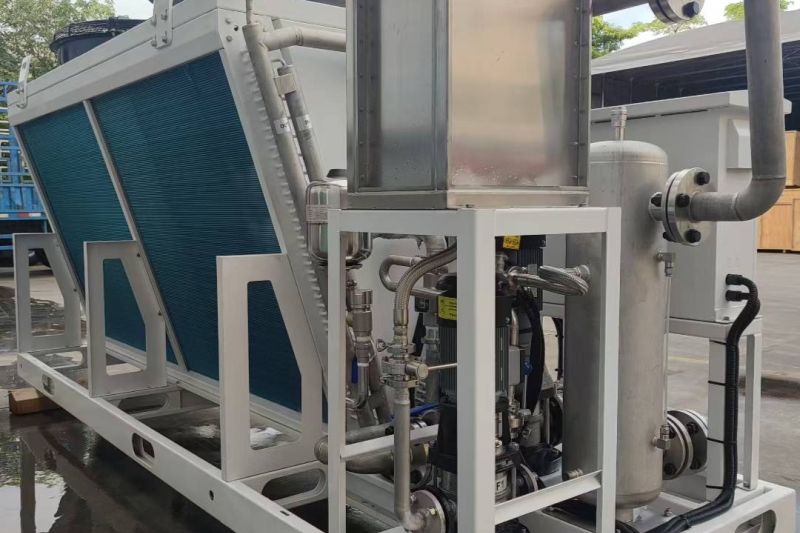
1266KW Stainless Steel Tube V-type Dry Cooler for Data Center Cooling
A 1266 kW stainless steel dry cooler engineered for hyperscale and enterprise data centers. IP55 enclosure, CE marked, ASHRAE TC 9.9 envelope compatible, and documentation pack ready for global projects.
View Product DetailsThe featured product is representative of how Boyi configures documentation: every order ships with a project-specific certification pack matched to the destination market. Projects destined for the EU receive CE declaration and PED notified body certification; North American shipments include UL listed control panel file numbers; data center projects receive ASHRAE class specification sheets; mining and dust-intensive sites receive IP rating confirmation against the IED design envelope.
Closing Summary
Heat exchanger certification is one area where shortcuts always cost more than they save. ISO 9001 confirms a manufacturer's quality system. ASME BPVC confirms pressure-bearing integrity. CE marking confirms European Union regulatory compliance. UL listing addresses North American safety expectations. RoHS restricts hazardous substances in integrated electronics. AHRI anchors thermal performance claims to independent testing. IP ratings define what outdoor exposure the equipment can survive. ASHRAE standards frame how data center and HVAC projects specify cooling. Each certificate is a piece of a larger compliance puzzle.
Buyers who walk through the seven-step verification workflow find that legitimate manufacturers welcome the scrutiny. The handful of suppliers who push back on certificate requests are usually the ones whose paperwork would not survive the check. Pair certification review with a conversation about the manufacturer's full product range, design capability, and project references, and the procurement picture becomes clear within a few cycles of dialogue. For questions on specific certificates or to request a tailored documentation pack for your next project, the Boyi Cooling engineering team is available through the contact page or the inquiry form.