ESG and Regulatory Drivers: The Shift Toward Sustainable Data Center Cooling
Sustainability & Compliance
ESG and Regulatory Drivers: The Shift Toward Sustainable Data Center Cooling
Environmental, Social, and Governance (ESG) expectations are no longer optional public-relations exercises. Investors screen portfolios for carbon intensity, regulators are writing binding efficiency rules into law, and enterprise customers now audit their suppliers' sustainability credentials before signing multi-year colocation and cloud contracts. For data center operators, cooling is where most of this pressure lands: thermal management typically accounts for 30 to 40 percent of facility energy use, and in water-scarce regions it can consume millions of liters of water per year. This article maps the regulatory landscape across four major markets, explains how PUE and WUE targets translate into equipment decisions, and shows why water-free, free-cooling-enabled dry coolers have become the default answer to sustainable data center cooling.
Why ESG Has Become a Board-Level Issue for Data Centers
A decade ago, sustainability in the data center industry was largely voluntary: operators published corporate responsibility reports, and a few hyperscalers committed to renewable energy purchases. Today the incentives are structural. Data center capacity is scaling faster than grid decarbonization in most regions, so the sector's electricity demand - and its associated emissions - is under increasing scrutiny from policymakers. At the same time, institutional investors managing trillions of dollars have signed commitments that require them to measure and reduce the financed emissions of their portfolios, and data centers are an increasingly visible line item. Finally, the enterprise buyers who lease colocation space or consume cloud services have their own Scope 3 reporting obligations, which means they pass sustainability questionnaires down to their infrastructure providers.
The practical consequence is that cooling technology choices are now procurement decisions with regulatory and reputational consequences, not just engineering trade-offs. A facility that relies on water-intensive evaporative cooling in a drought-prone region faces permitting risk; a facility with poor part-load fan efficiency will struggle to hit the PUE commitments written into its ESG report; and a facility that cannot evidence its energy performance will find it harder to attract ESG-linked financing. Understanding the specific regulations that apply in each market is the first step toward de-risking these outcomes.
The EU Energy Efficiency Directive (2023/1791): What Operators Must Prepare For
The recast Energy Efficiency Directive (EED), which entered into force in late 2023, is the most consequential piece of cooling-related legislation for European data center operators. Under the directive, EU member states must achieve binding energy savings targets, and data centers above a certain threshold fall under specific data center reporting obligations covering energy consumption, power utilization effectiveness, water usage, waste heat recovery, and server utilization. The directive also mandates energy audits at defined intervals for large enterprises and pushes heat recovery as a design consideration rather than an afterthought.
For cooling system designers, three elements of the EED deserve particular attention. First, the reporting regime makes PUE and WUE publicly comparable across facilities, which turns efficiency from a marketing claim into an auditable number. Second, the directive's emphasis on waste heat recovery favors cooling architectures that produce usable temperature lifts - and it strengthens the business case for free cooling, which in Northern European climates can satisfy the majority of annual cooling demand with compressors offline. Third, mandatory audit findings must be acted upon, meaning an inefficient legacy cooling plant identified in an audit cannot simply be documented and ignored; it becomes a scheduled capex item.
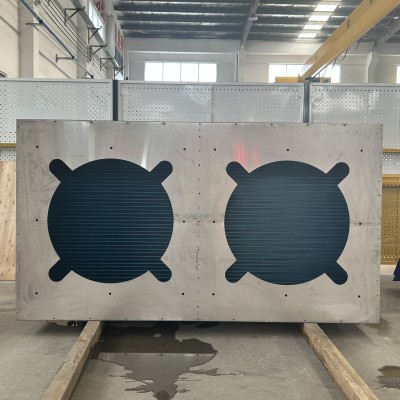
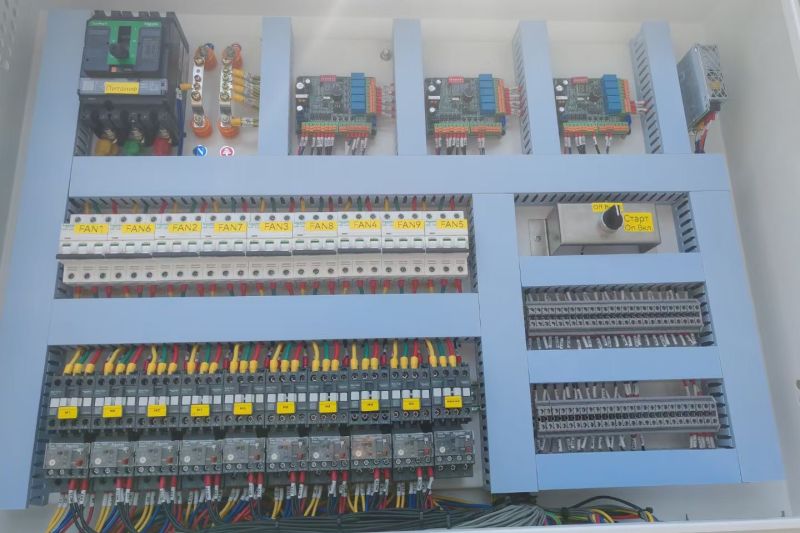
Operators who respond proactively typically combine three measures: a high-efficiency air-side heat rejection system based on heat exchanger coils with generous surface area, electronically commutated (EC) variable-speed fans that hold efficiency at part load, and controls that exploit free cooling whenever ambient conditions allow. Water-free operation, meanwhile, sidesteps the growing patchwork of municipal water restrictions that several European jurisdictions have introduced during recent drought years.
United States: Tax Incentives and State-Level Water Restrictions
The regulatory picture in the United States is less centralized but arguably more financially interesting. The Inflation Reduction Act's Section 48C credits provide investment tax credits for qualifying advanced energy and industrial decarbonization projects, and efficiency-driven cooling retrofits can qualify when they are structured as part of a broader emissions-reduction project. Several utilities additionally offer rebate programs that pay per kilowatt of peak demand reduction - and because cooling is the largest controllable electrical load in most facilities, high-efficiency dry cooling frequently clears the rebate threshold on its own economics.
On the restrictive side, water is the story. State and municipal authorities in Arizona, Nevada, Texas, and parts of California have constrained new water allocations and, in some cases, specifically scrutinized evaporative cooling for large compute facilities. Hyperscale operators have responded by shifting their reference designs toward air-cooled or hybrid systems, and water usage effectiveness (WUE) has moved from a niche metric to a standard disclosure item. For operators in these markets, a dry cooler is not simply an environmental gesture; it is the design choice that removes water availability as a permitting dependency altogether.
China's Updated Energy Conservation Law: Stricter Standards for Industrial Facilities
China revised its Energy Conservation Law in 2024, reinforcing a policy framework that has steadily tightened efficiency requirements for industrial and digital infrastructure facilities. Key instruments include mandatory energy efficiency standards for equipment, energy consumption quotas for energy-intensive industries, and green data center evaluation programs that set explicit PUE benchmarks for new construction - commonly 1.25 or better for new large facilities, with even stricter targets in first-tier hub regions designated under the national computing infrastructure plan.
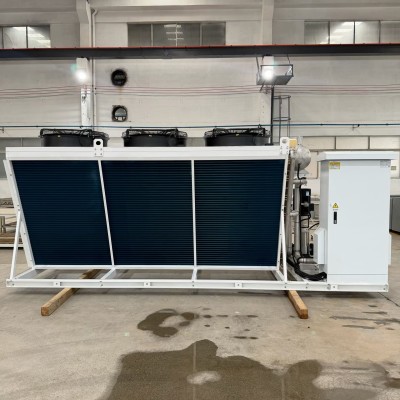
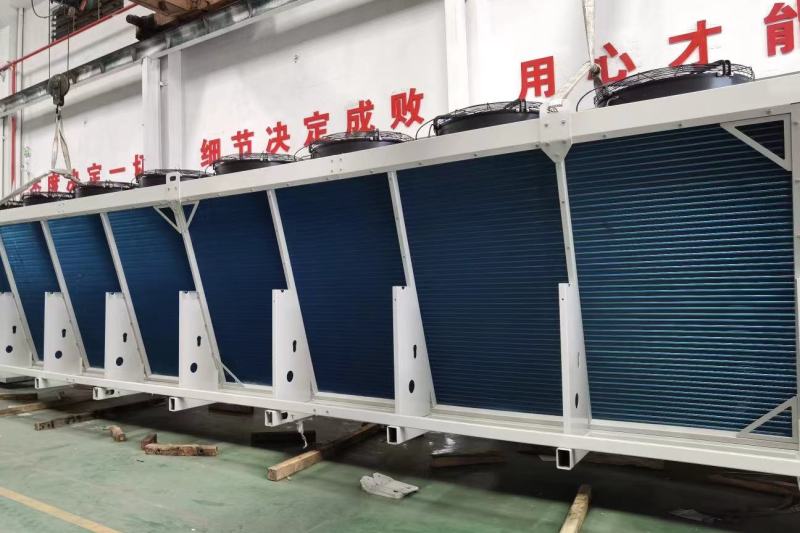
Because Chinese authorities evaluate both energy intensity and water consumption, the country's data center build-out in northern regions has favored air-side economizers and dry coolers that exploit cold winter climates for most of the year. Manufacturers with 20+ years of thermal engineering experience, such as Boyi Cooling, serve this market with customized V-type and flat-type dry cooler configurations sized for the specific ambient profile of each site - a capability that matters when a facility must document, rather than merely assert, its compliance with regional efficiency benchmarks.
India's PAT Scheme: Compliance for Energy-Intensive Sectors
India's Perform, Achieve and Trade (PAT) scheme, administered by the Bureau of Energy Efficiency, assigns energy consumption targets to designated consumers in energy-intensive sectors and allows those who over-achieve to trade energy saving certificates (ESCerts). While data centers were incorporated into India's efficiency policy framework more recently than steel or cement, the direction of travel is unmistakable: energy intensity is becoming a regulated, tradable quantity. For data center operators in India, where ambient temperatures are high and water stress is severe in many states, the engineering challenge is acute - hot, dry climates are precisely where evaporative cooling struggles and where well-designed dry cooling with adiabatic assist delivers the best combination of water avoidance and energy performance.
PUE and WUE Targets: The Metrics Regulators and Investors Actually Watch
Across all four markets, two acronyms recur in every compliance conversation. Power Usage Effectiveness (PUE) measures total facility energy divided by IT energy; every kilowatt-hour consumed by fans, pumps, and controls pushes it above 1.0. Water Usage Effectiveness (WUE) measures liters of water consumed per kilowatt-hour of IT energy; for evaporatively cooled facilities it is frequently the more uncomfortable number. Regulatory regimes increasingly reference both, and ESG rating agencies increasingly penalize operators who decline to disclose them.
Dry coolers improve both metrics simultaneously, which is unusual among cooling technologies. On energy: modern dry coolers with EC fans modulate airflow to match load, and in climates with meaningful free-cooling hours the compressors that dominate chiller-plant PUE can be bypassed entirely for large portions of the year, driving annualized PUE toward 1.1-1.2 in favorable geographies. On water: a closed-loop dry cooler consumes essentially zero water in normal operation, reducing WUE to near zero and eliminating water treatment chemicals, blowdown disposal, and legionella management obligations. The table below summarizes how the major regulatory regimes intersect with these metrics.
| Regulation / Scheme | Region | Primary Mechanism | Cooling Implication |
|---|---|---|---|
| Energy Efficiency Directive 2023/1791 | European Union | Binding savings targets, DC reporting, audits | Disclose PUE/WUE; heat recovery; free cooling |
| IRA Section 48C + utility rebates | United States | Tax credits, demand-reduction incentives | Fund efficient cooling retrofits; avoid water risk |
| Energy Conservation Law (2024 revision) | China | Efficiency standards, PUE benchmarks for new DCs | Air-side economizers; customized dry coolers |
| PAT scheme (BEE) | India | Intensity targets, tradable ESCerts | Water-free cooling with adiabatic assist |
Cutting Scope 2 Emissions: Free Cooling Plus Variable-Speed Fans
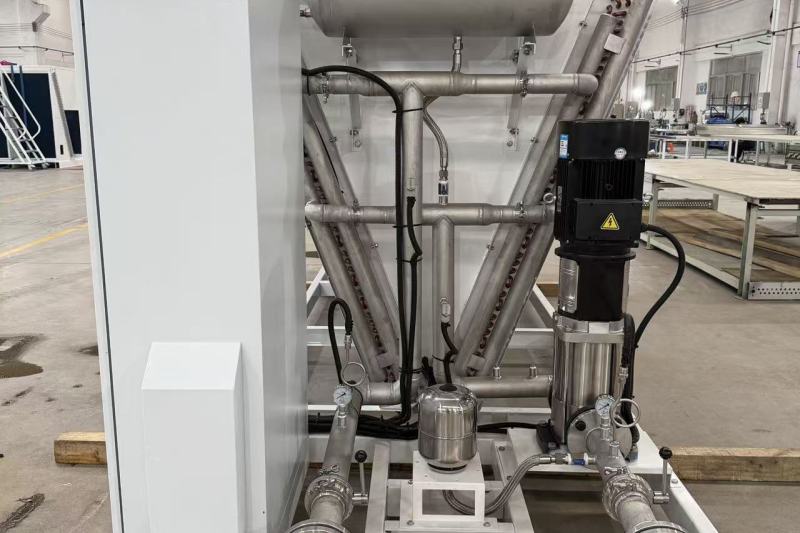
Scope 2 emissions - the indirect emissions from purchased electricity - are the largest emissions line item for a grid-powered data center, and cooling is the largest controllable contributor to that line. Two technologies do most of the work. Free cooling exploits ambient air as a heat sink whenever its temperature (or, with appropriate control strategies, its wet-bulb-related enthalpy) is below the required cooling temperature; in temperate and northern climates this can cover the majority of annual operating hours. Variable-speed EC fans then ensure that when mechanical heat rejection is running, it does so at the lowest possible energy draw, because fan power follows the cube of airflow - running fans at 80 percent speed costs roughly half the power of full speed.
The combination is multiplicative rather than additive. A facility that pairs a generously sized coil surface with EC fans and intelligent free-cooling controls can cut cooling-related electricity consumption by 30 to 50 percent against a legacy constant-speed design, which flows directly into Scope 2 reductions, PUE improvement, and - where schemes like PAT or utility rebate programs apply - measurable financial returns. These are exactly the design principles Boyi Cooling builds into every custom unit, from coil circuiting that preserves low approach temperatures at part load to control sequences that automatically balance free cooling, adiabatic assist, and mechanical operation.
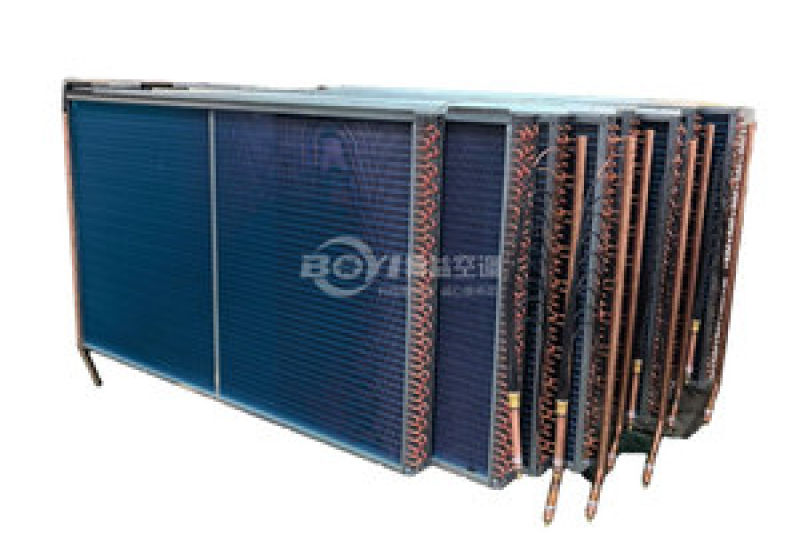
Energy-Saving Copper Tube Aluminum Fin Water to Air Evaporator
Evaporator coils are part of a refrigeration or air conditioning system. They are where the refrigerant evaporates, absorbing heat from the surrounding air - engineered by Boyi Cooling for high heat-transfer efficiency and long service life in energy-sensitive systems.
ESG Reporting Frameworks: How Cooling Choices Show Up in GRI, SASB, and TCFD Disclosures
Even where regulation is not yet binding, voluntary reporting frameworks have made cooling performance visible to capital markets. Under GRI standards, companies report energy consumption within and outside the organization, water withdrawal, and emissions - all figures that cooling architecture directly moves. SASB's data center infrastructure standard calls out water management and energy management as material topics, prompting listed operators to disclose PUE and WUE alongside financial results. TCFD-aligned climate reporting asks companies to describe transition risks, and for a water-cooled operator in a drought-exposed market, water scarcity is a textbook transition risk that a switch to dry cooling permanently retires.
The practical takeaway for operators and their advisors is that cooling decisions should be documented with reporting in mind. Equipment specifications, factory test reports, and measured performance data from a credible manufacturer give the sustainability team defensible numbers for disclosure. This is one reason Boyi Cooling supplies thermal performance test data and quality documentation with its custom units - the numbers that support an engineering design also support an ESG report.
How Boyi Cooling Supports Sustainable Cooling Programs
Energy-Saving Design
Optimized coil circuiting, generous fin surface, and EC variable-speed fan options reduce annual cooling energy and support aggressive PUE targets.
Water-Free Operation
Closed-loop dry coolers consume virtually no water in normal operation, cutting WUE to near zero and removing water from the permitting critical path.
50,000+ Hour Service Life
Robust construction and optional electrophoretic anti-corrosion treatment extend equipment life, reducing embodied-carbon churn from premature replacement.
20+ Years of Custom Engineering
Every unit is sized to the site's ambient profile and load curve - the foundation for credible, documented regulatory compliance.
Boyi Cooling has spent more than two decades designing and manufacturing finned-tube heat exchangers and dry cooling systems, exporting customized solutions to over 30 countries across data center, mining, chemical, and industrial applications. Whether the requirement is a 3.3 MW V-type array for a hyperscale campus, a compact unit for an edge site, or an energy-saving evaporator coil for an efficient refrigeration loop, our engineering team delivers performance documentation that survives both commissioning tests and ESG audits. You can browse the full range on our products page or learn more about our manufacturing capabilities on the company profile.
A Practical Compliance Checklist for Cooling Infrastructure
Frequently Asked Questions
Do dry coolers really eliminate water consumption?
In normal operation a closed-loop dry cooler rejects heat directly to ambient air and consumes no water. Adiabatic-assist versions use a small amount of water only during the hottest hours, still reducing annual water use by roughly 95 percent versus evaporative cooling.
How does the EU Energy Efficiency Directive affect existing data centers?
Facilities above the directive's thresholds must report energy, PUE, WUE, and heat-recovery metrics on a recurring schedule, and large enterprises must complete energy audits whose findings feed into improvement plans. Inefficient legacy cooling plants therefore become scheduled upgrade items.
Can free cooling work in hot climates?
Full free cooling dominates in temperate climates, but hybrid designs combining dry coolers with adiabatic pre-cooling or elevated chilled-water temperatures capture meaningful free-cooling hours even in hot regions - and always cut water use compared with evaporative systems.
What documentation should we request from a cooling manufacturer for ESG reporting?
Ask for factory thermal performance test data across the load range, fan power curves, expected service life, and material certifications. These support both the engineering design and the disclosure narrative.
Conclusion: Regulation Is Turning Sustainable Cooling into Table Stakes
The direction is consistent across every major market: energy and water performance are moving from voluntary metrics to regulated, reportable, and financeable ones. Operators who modernize their cooling plant now - with water-free dry coolers, EC variable-speed fans, and controls that harvest every available free-cooling hour - will meet the EU EED, U.S. incentives, China's efficiency benchmarks, and India's PAT scheme from a position of strength, while feeding clean data into GRI, SASB, and TCFD disclosures. Operators who wait will retrofit under deadline pressure at premium cost. If you are planning a sustainability-driven cooling upgrade, contact Boyi Cooling for a site-specific proposal, or send us your inquiry with your load profile and ambient conditions - our engineers will respond with a customized, compliance-ready design.